The Soldier · The British Army · 1939–1946 · Italy
Called Up, October 1939
MacKelden had already voluntarily joined the Territorials as a cadet before the war, over his mother's fierce objections.
When war was declared on 3 September 1939, he was lying in bed with tonsillitis listening to Chamberlain's broadcast on the radio while his mother painted his throat with iodine. She comforted herself with the thought that at 17 he was too young to be called up. She was wrong.
He was ordered to report for duty on 3 October 1939. He was 17 years and 2 months old. The Army's first act was to fill both his arms with vaccination needles. His arms swelled to twice their size and he was back home on sick leave within the week.
The conditions were stark: one blanket per man, plank beds, four-hour shifts through a bitter November, food so scarce that the men foraged for mushrooms and potatoes from farmers' fields.
Too young for overseas combat (the minimum age was 19), he was later transferred to anti-aircraft searchlight units in Surrey and Lincolnshire, where he worked as a clerical orderly, earned his PT instructor's qualification, and, on his weekly 24-hour passes into Gainsborough, met the woman he would marry, Patricia (Pat) Snowdon.
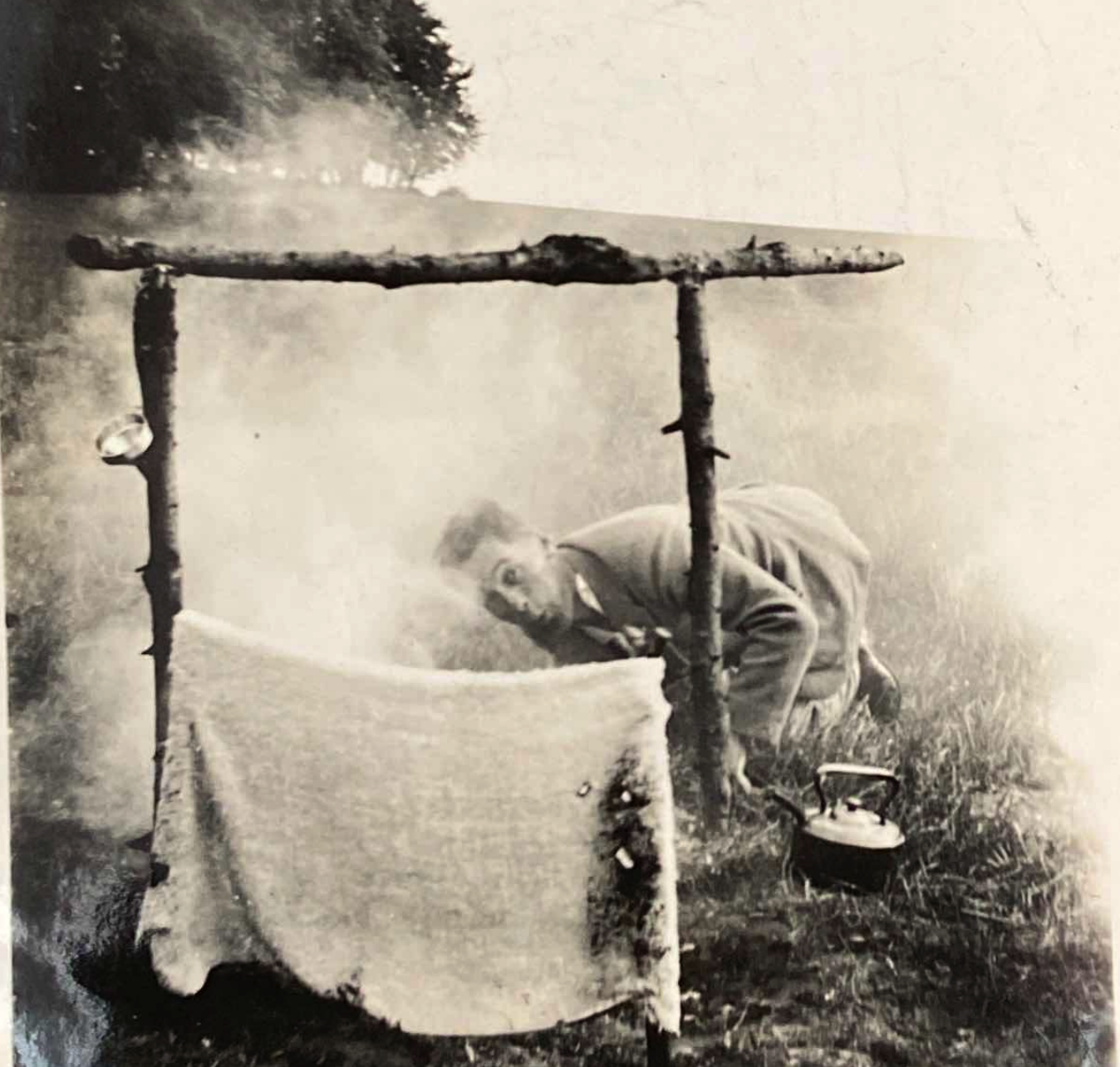
Alec trying to stay warm while guarding the Shakespeare Cliffs
Commissioned into The Buffs, November 1943
After passing the War Office Selection Board, MacKelden completed officer training at the OCTU in Morecambe, Lancashire. It was a gruelling four-month course on the high moors of the Pennines, often soaked to the skin for a week at a time, sleeping in the open.
Of an initial intake of 93 cadets, only 42 passed out.
At the passing-out dinner, slightly the worse for wear, MacKelden gave an impersonation of the towering Regimental Sergeant Major, only to realise mid-performance that the man himself was sitting at the table. The RSM's verdict the following morning, as a very proud 21-year-old Second Lieutenant marched across the parade ground for the last time, was almost a smile.
He was commissioned on 13 November 1943, joining The Buffs: his first choice of regiment, which accepted only the highest-performing cadets (later absorbed into Princess of Wales's Royal Regiment). A regimental newsletter from January 1944 records his arrival:
"We welcome several new Officers to the best Company in the Battalion, 2/Lieuts. Cade, Mackeldon and Willis."
Before embarking, he took embarkation leave, during which he met his newborn son Ian for the first time. He and Pat both knew, without saying it, what the leave meant.
He bought her new clothes with his officer's clothing coupons. "Clothes she both of us knew I would never now need."
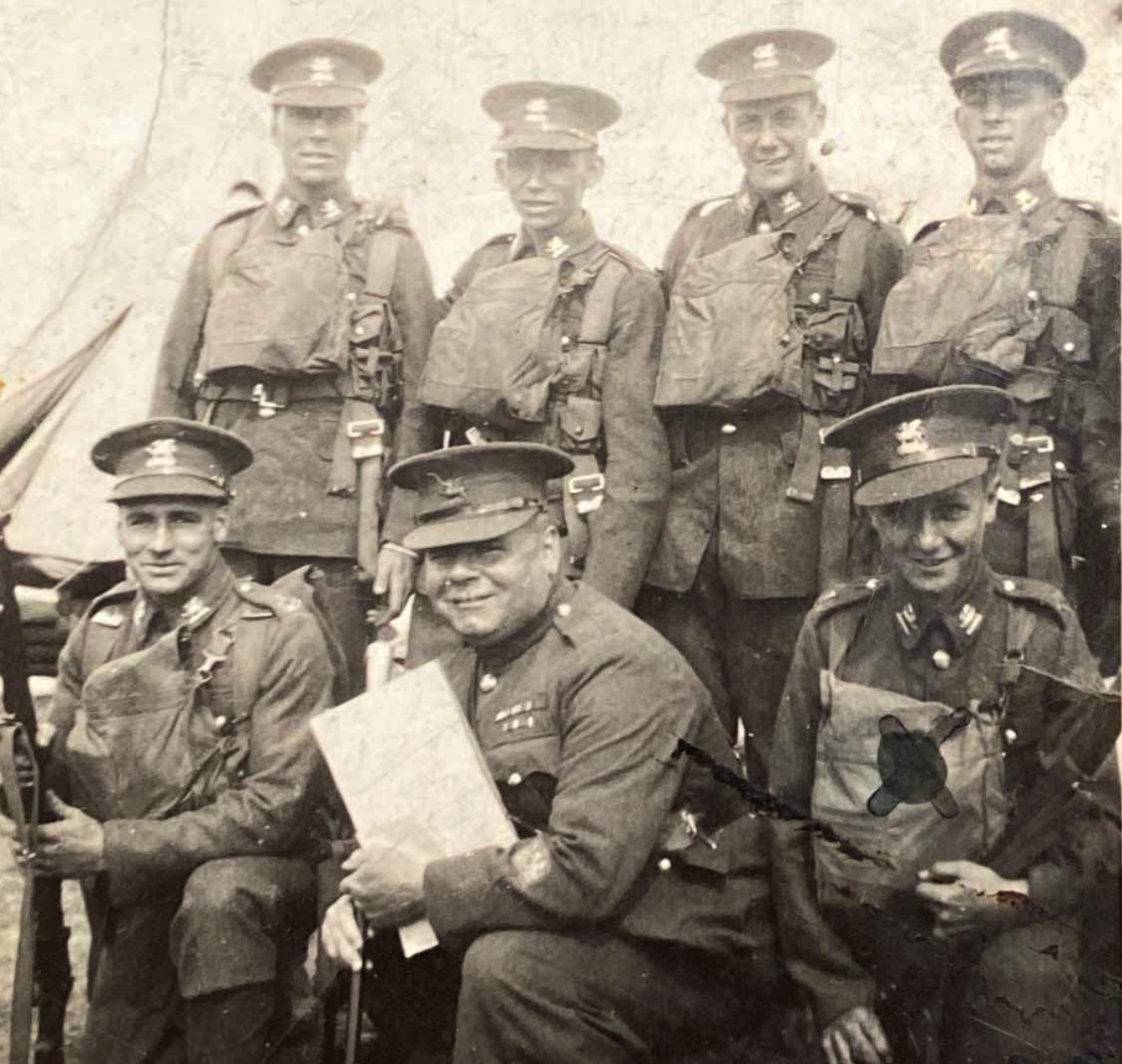
Alec joins The Buffs (at bottom right)
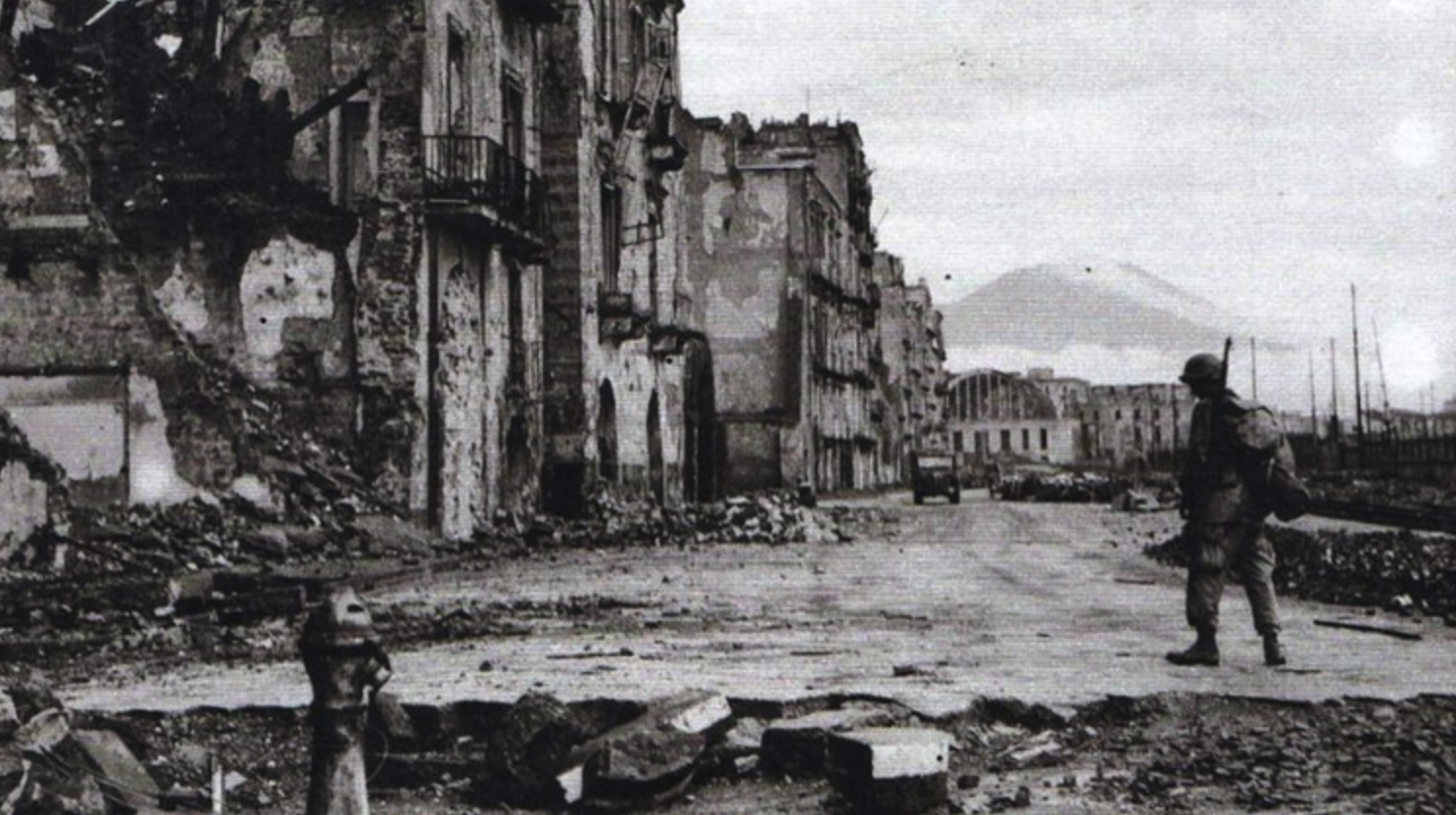
Naples, January 1944 — "A Scene of Utter Desolation"
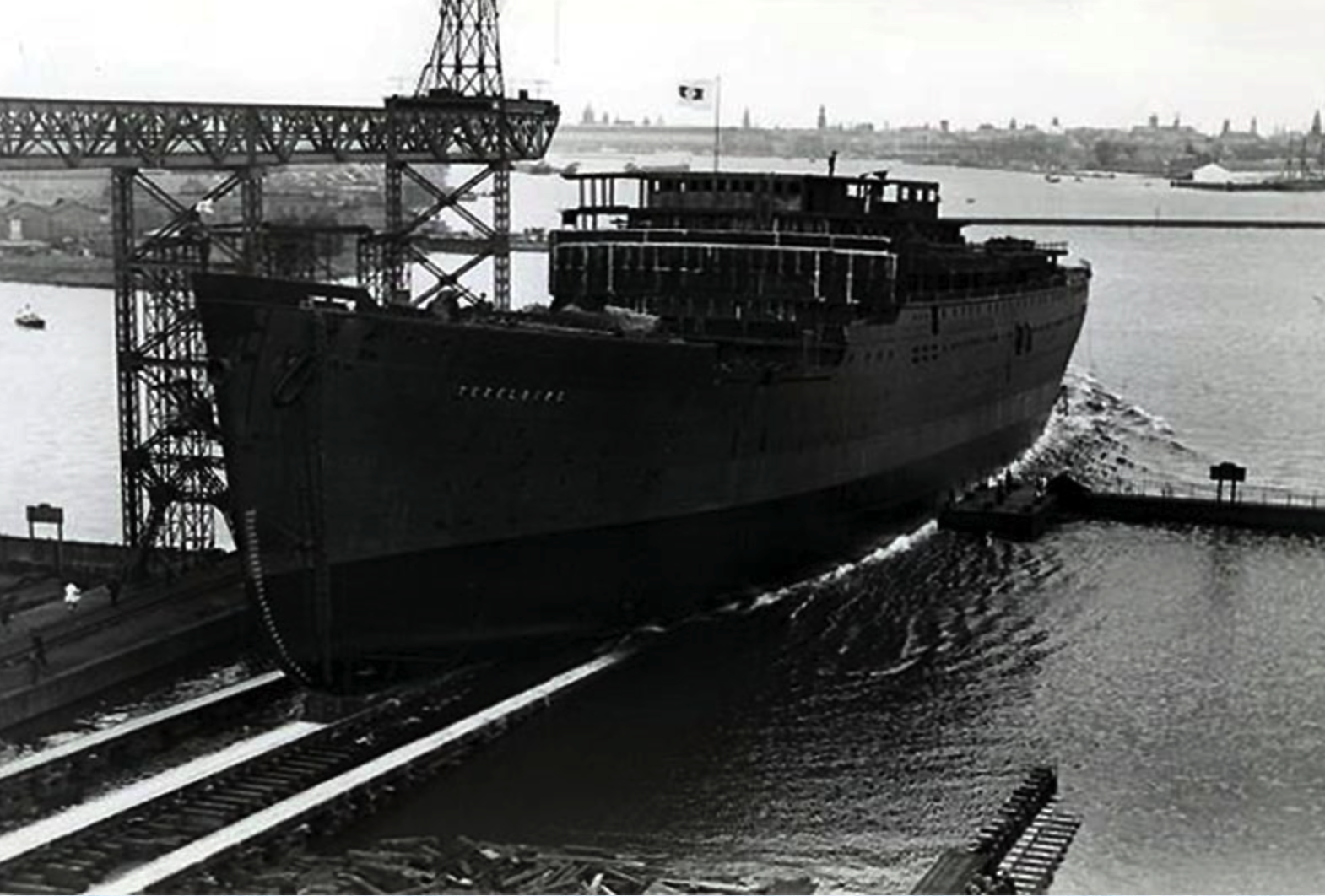
MacKelden sailed from Greenock aboard the SS Tegelburg in early 1944, arriving in Naples. The city was a shock.
The Tegelberg slides down the slipway into the water on July 10, 1937. Image Source: http://ssmaritime.com/KPM-Boissevain-Tegelberg-Ruys-1.htm
"We sailed into a much bombed and battered harbour — a scene of utter desolation. It was Naples and a very depressing landfall."
Bomb-cratered roads and fields. Shattered villages and houses. Homeless, hungry, emaciated people, particularly the little children, many of whom wore no shoes.
It was winter, bitterly cold and wet. Everyone in tattered rags, all carrying a discarded jam tin to collect scraps of food.
The destruction of Naples. Image Source: https://historiamag.com/the-liberation-of-naples-in-1943-and-its-dire-consequences/
At the transit camp he could hear, on still nights, the distant sounds of his old Territorial battalion, the 5th Buffs, fighting at Monte Cassino.
His orders came quickly: he was to take an American landing craft from Naples harbour to the Anzio beachhead, to join the 1st Battalion.
The night crossing produced two memories he never forgot. The first: tinned peaches provided by the Americans, a luxury he had not seen in years.
The second: a large magazine photograph pinned to the lavatory door of a skinny young man, captioned "Frank Sinatra, King of the Heads." He had no idea who Frank Sinatra was.
Anzio itself was worse than Naples. A popular pre-war Roman holiday resort, it had been almost entirely destroyed. "Hardly a building seemed to be standing."
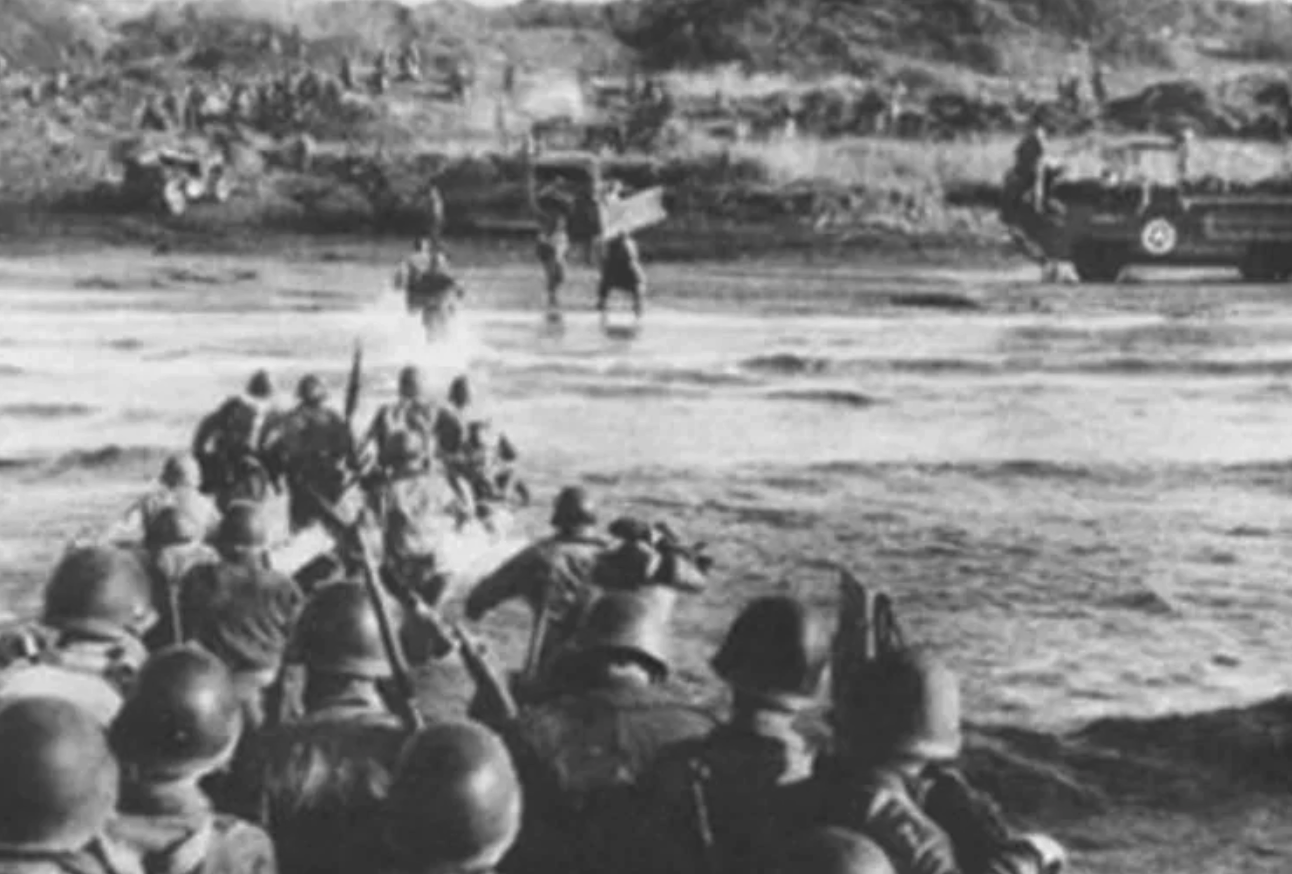
Allied troops land at Anzio, January 1944. Photograph Source: Public Domain
The Lobster Claw — Life on the Beachhead
MacKelden's dugout, his home when "resting," was 5 feet deep, 6 feet long, and just wide enough for a camp bed. The roof was two old doors covered in sandbags.
The frontline itself was worse: dugouts cut into the sides of wadis, the deep dry gullies that criss-crossed the beachhead, with the two sides separated by barbed wire, as in the First World War a generation earlier.
His company moved up into the "lobster claw," a wadi named for its shape, from which the German lines were clearly visible. The soundtrack of daily life:
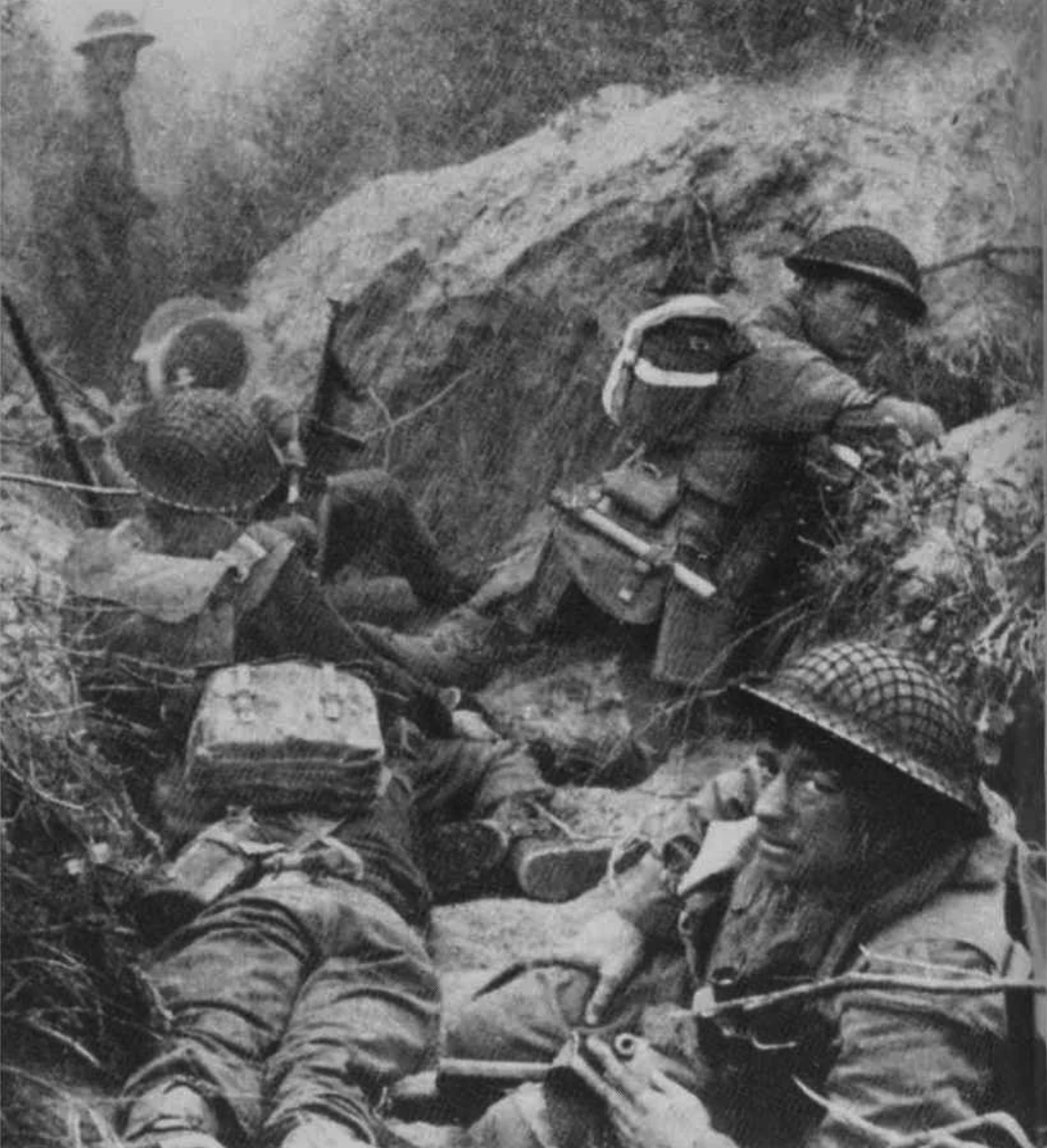
Typical Wadis at Anzio Source: https://www.militaryimages.net/media/the-anzio-wadis.6023/
"A constant rattle of machine gun fire — normally firing on fixed lines — and an almost permanent barrage of mortar bombs, not to mention the spasmodic shelling from well-sighted '88s'."
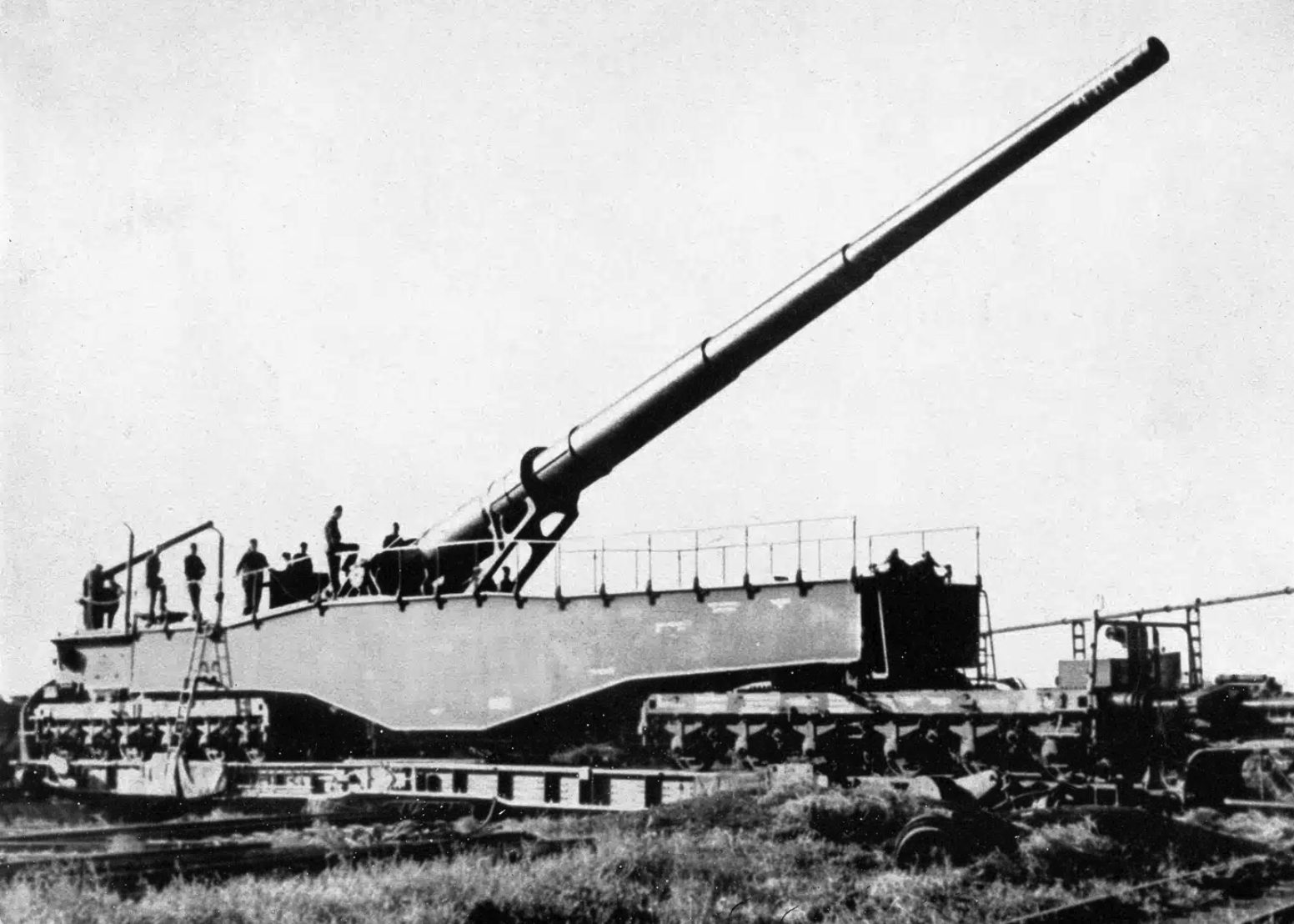
Each morning, "Anzio Annie," a massive German railway-mounted gun, would join the bombardment. Its shells sailing overhead sounded "for all the world like monstrous barrels rolling over and over."
Every third morning at 8am, the Germans would pause their shelling for about an hour while Allied casualties were ferried out to a hospital ship anchored offshore.
MacKelden noted this with grim foresight: "Little did I imagine that some three months later this would be my own mode of departure from the beachhead."
Anzio Annie a Krupp K5 railway gun fired 28cm shells that weighed 550 lbs. Source: https://www.thearmorylife.com/anzio-annie-krupp-k5-german-railway-gun/
The day MacKelden arrived, two new soldiers also joined the company: cousins in their late twenties, both named Private Rogers. One had a permanently bewildered expression, "as if he was silently saying 'how on earth did I end up here?'"
The other went up the line that first night. The following night he was killed.
"You can perhaps imagine the effect that had on my Private Rogers, who was a married man with children. It was, to say the least, a somewhat discouraging start."
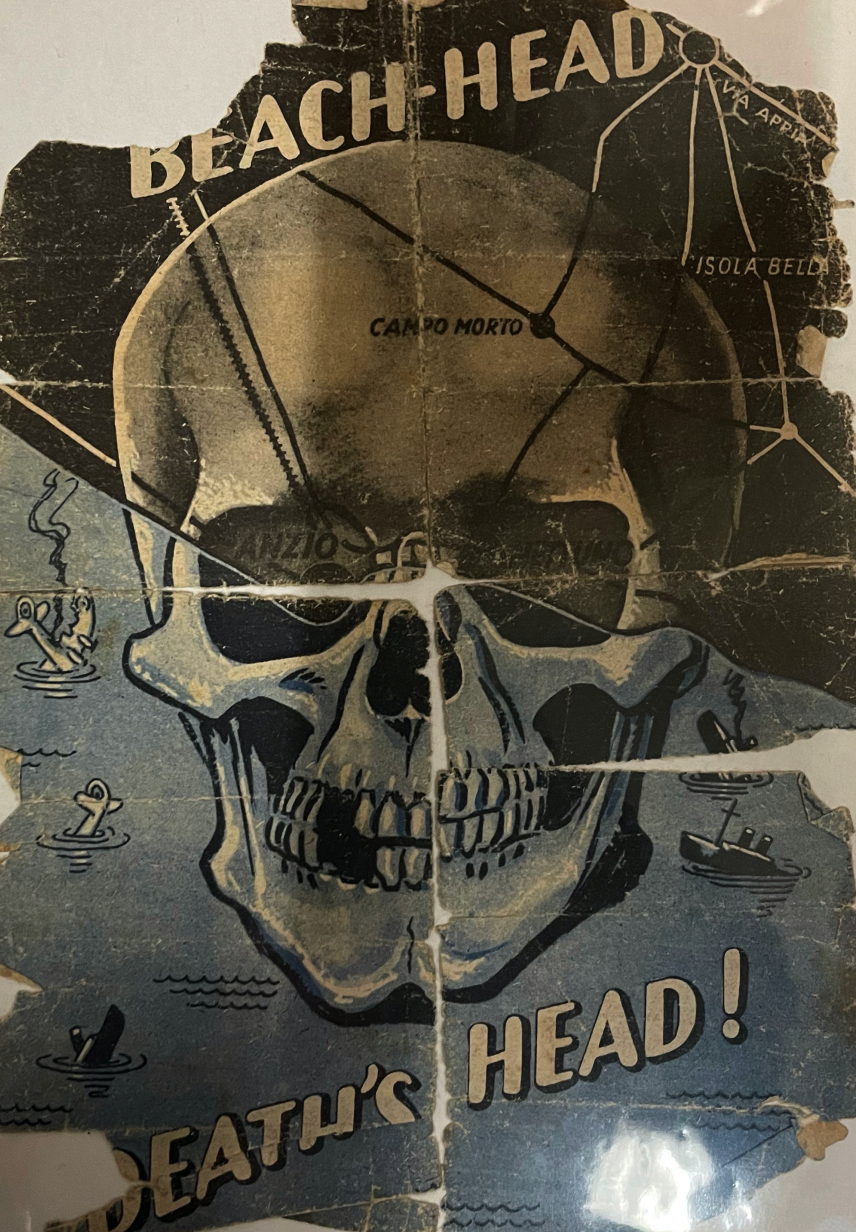
German Propaganda leaflet dropped on Anzio beachhead. Source: https://www.soldiersofshropshire.co.uk/wp-content/uploads/2023/07/1st-KSLI-1939-1945-v27.7.2023-pdf.pdf
The Night of the Attack
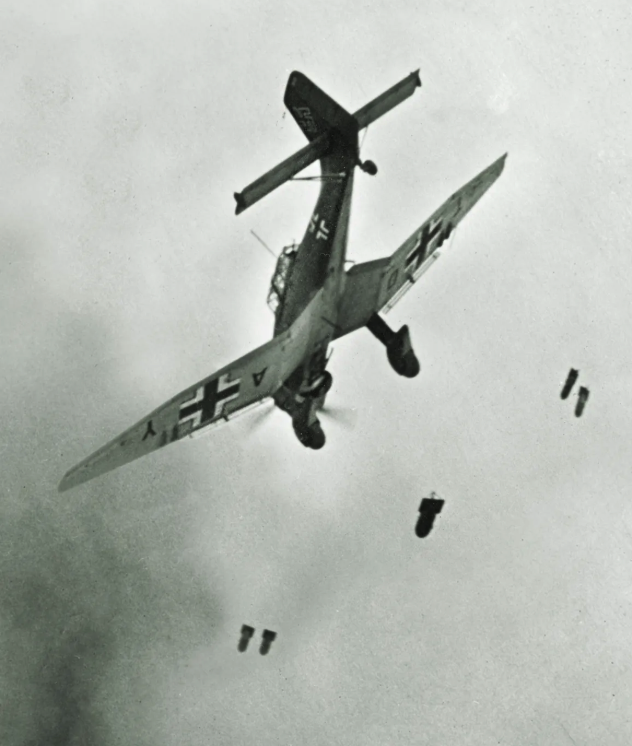
It started at Standdown time, about one hour after nightfall. First a Stuka dive-bomber attack. Then a German assault through the wire.
"Even now it is impossible for me to say what happened exactly. I remember running towards my Company Commander's dugout, which seemed to have exploded, and frantically digging with my hands to get in."
A Stuka drops its payload Source: https://historynet.com/german-stuka/
The scene inside was horrifying. The Quarter Master Sergeant, a man he had been chatting with just moments before, who had arrived under cover of darkness with the rations, was dead.
Major John Rollo, his Company Commander, looked dead but was still breathing: "his head was split open like a melon and was bleeding profusely."
MacKelden set about evacuating the wounded. The dead were handled as all dead on the beachhead were handled: wrapped in a plastic gas cape, dug into the side of the wadi, propped with a board and stake, plastered over with wet earth.
If it rained heavily, they washed out. Re-interring them was an even less pleasant task.
While reorganising the defence, his gloomy Private Rogers approached and said: "You have been wounded too, you know." MacKelden dismissed it. He was just covered in blood from the other casualties.
"No," said Rogers, "your shirt is stuck to your back and blood is still leaking from a hole." By this point, Rogers had arrived at the firm conclusion that "Anzio was quite definitely not the place for Private Rogers at all."
The Ward Orderly's Head
At the advance dressing station, MacKelden found John Rollo on the table, head swathed in bandages, moaning "oh my back." When MacKelden asked whether his back had been examined, the doctor said he hadn't had time. Together they turned Rollo over to find approximately 17 further wounds puncturing his back.
MacKelden waited his turn. Ahead of him was a young Scottish soldier whose foot was hanging by a thread: he had trodden on an anti-personnel mine, "deadly, bloody things."
When the overworked doctor finally reached MacKelden, he thrust a long silver probe into the hole in his chest to establish the bullet's direction of travel. The doctor's grim humour: "When you strike ore you shout, Eureka!"
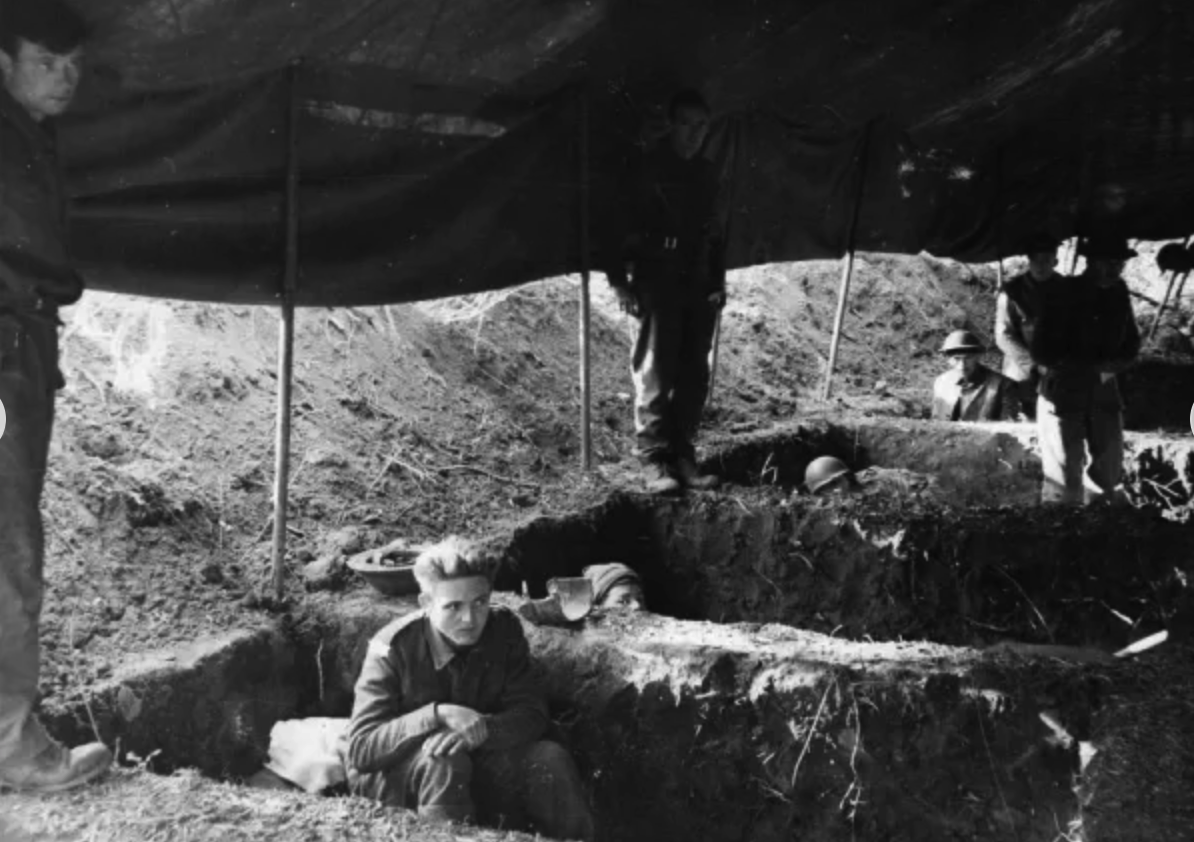
Evacuated to a casualty clearing station, a large semi-sunken pit under a Red Cross marquee surrounded by sandbags, about 20 men on stretchers, MacKelden lay close to an American heavy artillery battery.
On the second night, the battery was attacked by Stukas. One bomb landed directly in the entrance of the ward.
Medical Tent at Anzio Source: https://shop.memorylane.co.uk/mirror/1400to1499-01463/major-general-sir-ernest-m-cowell-21894408.html
"Fortunately, I was located halfway along — but the ward orderly's head came rolling past my stretcher and other poor wretches nearer the entrance were either killed or again severely wounded."
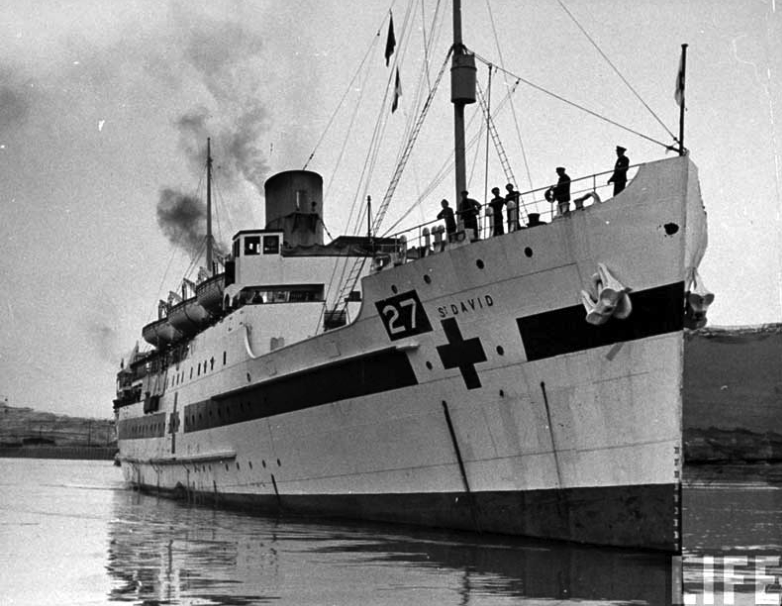
MacKelden began to pray from that moment and did not stop for 48 hours, until he was aboard the hospital ship. Transferring stretcher cases through the ship's door in a swell was hazardous. He elected to make the transfer on his own two feet.
Hospital Ship at Anzio Source: https://ahoy.tk-jk.net/Letters/HospitalshipStDavidsunkon.html
"The thought of being dropped into the drink with one arm strapped to my side and my body securely fastened to a stretcher did not appeal one little bit."
Silence
"First it was the wonderful thrill of being in pyjamas in a clean bed with sheets — but then quite suddenly I became aware of the quietness. There was no sound apart from the comforting murmur of the ship's engines. For three months, quite unconsciously, I had become totally accustomed to the never-ending noise of battle, the whine of shells, the smell of cordite exploding and the constant sounds of explosions. Now quite suddenly all was quiet as if peace had been declared. It was in many ways quite eerie."
— Alec MacKelden, from his memoirs
The bullet, or shrapnel fragment, he was never certain, had lodged in the wall of his right lung (where it remained for the rest of his life), taking a rib with it. He was operated on at the 77th General Hospital in Trani. He convalesced at La Selva on the Adriatic Coast, a village of beehive-shaped stone houses originally built as a holiday resort for Mussolini's officers, converted by the Red Cross. "I adored it — swimming in the mornings and afternoons, drinks and occasional dances after dinner in the evenings with the Red Cross nurses."
Florence, August 1944 — "One of the Oddest Experiences of My Life"
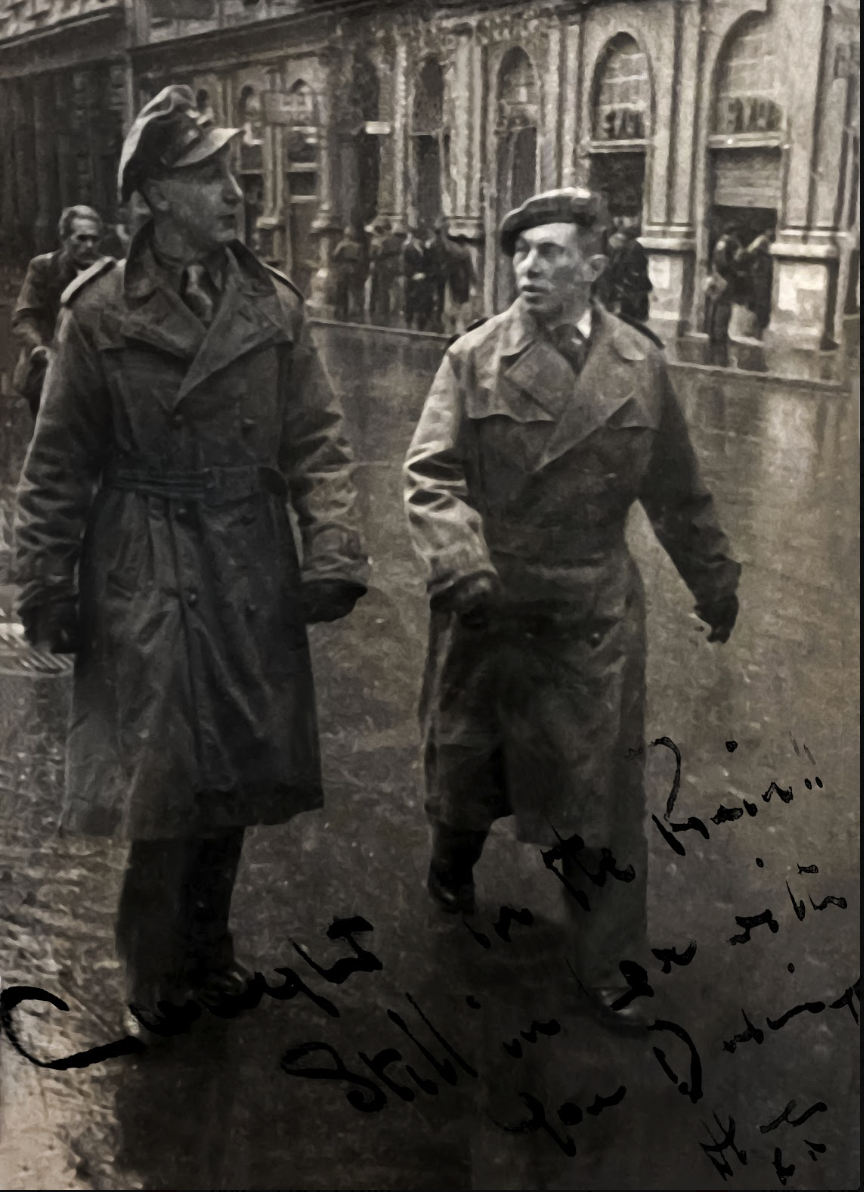
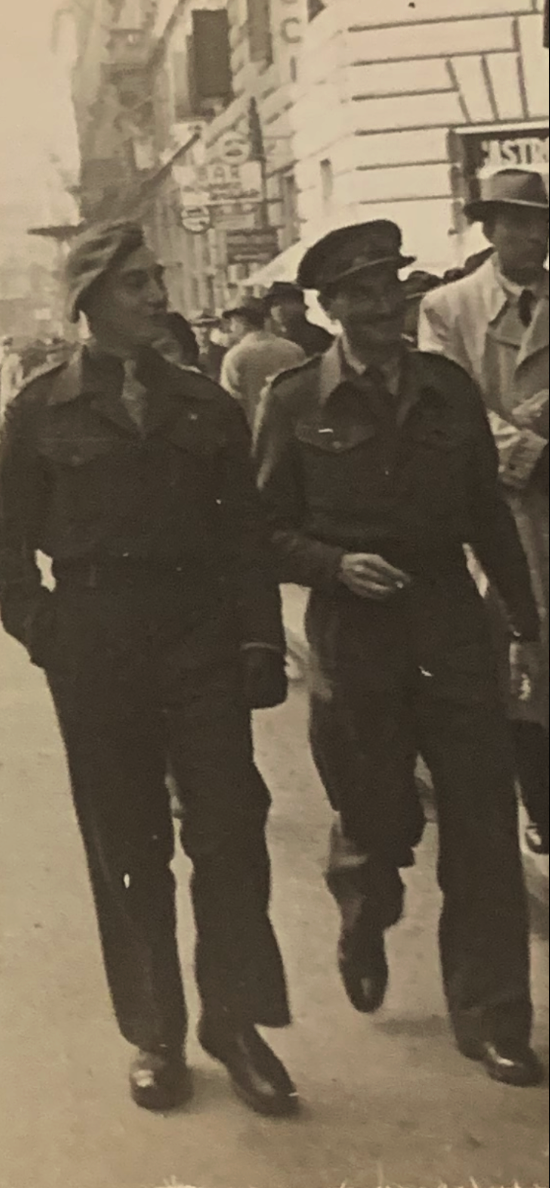
Alec in Rome after its liberation by the Allies, June 1944.
"Caught in the Rain!! Still in love with you my Darling!"
Alec
Rejoining his battalion near Rome after convalescence, MacKelden moved north with the advance toward Florence. His 22nd birthday was spent in a foxhole dug into a vineyard just south of Assisi.
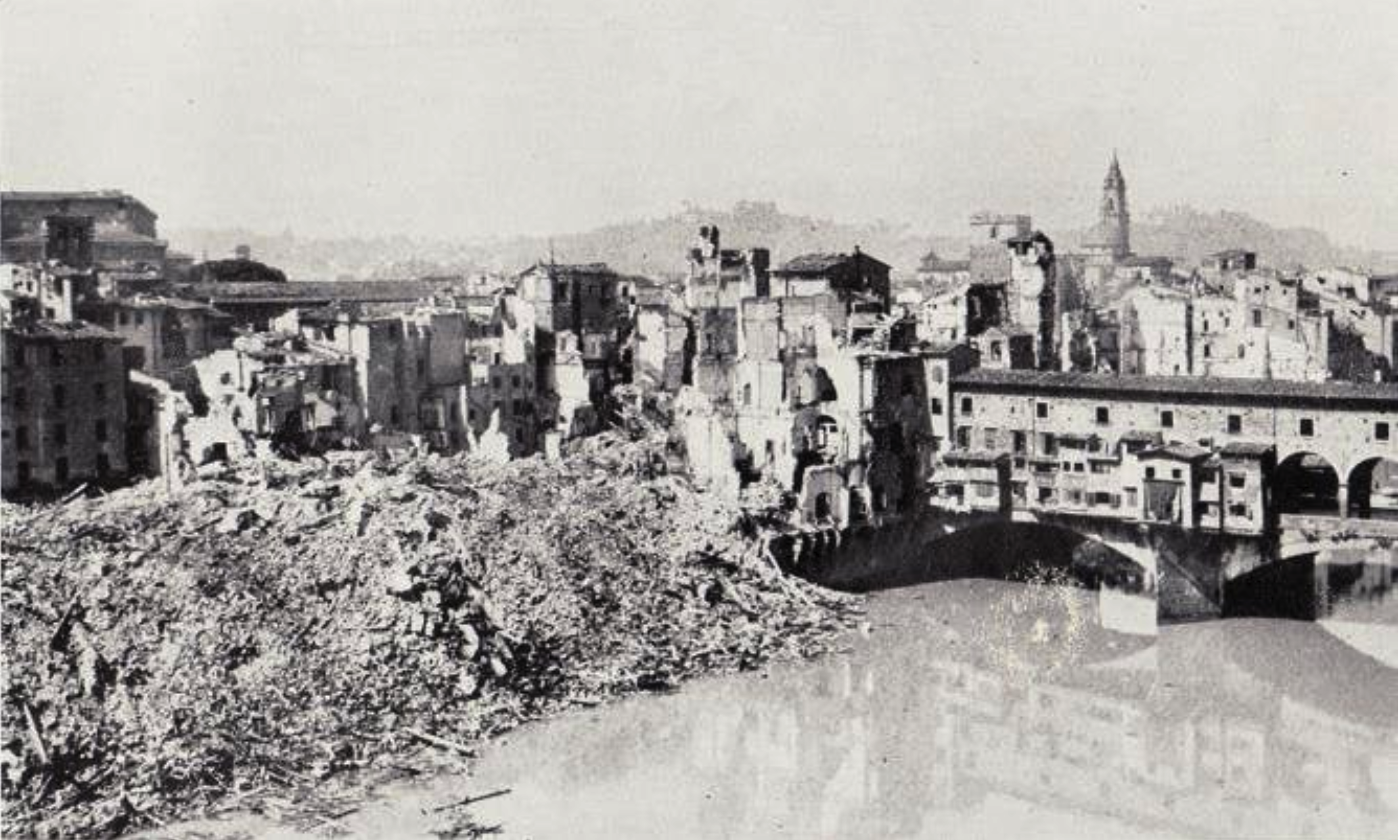
In August 1944, he led his platoon in a night crossing of the River Arno, half swimming, half wading across an underwater ford close to the ruins of the Ponte Vecchio, the only bridge the Germans had left standing, its neighbouring buildings demolished to block access.
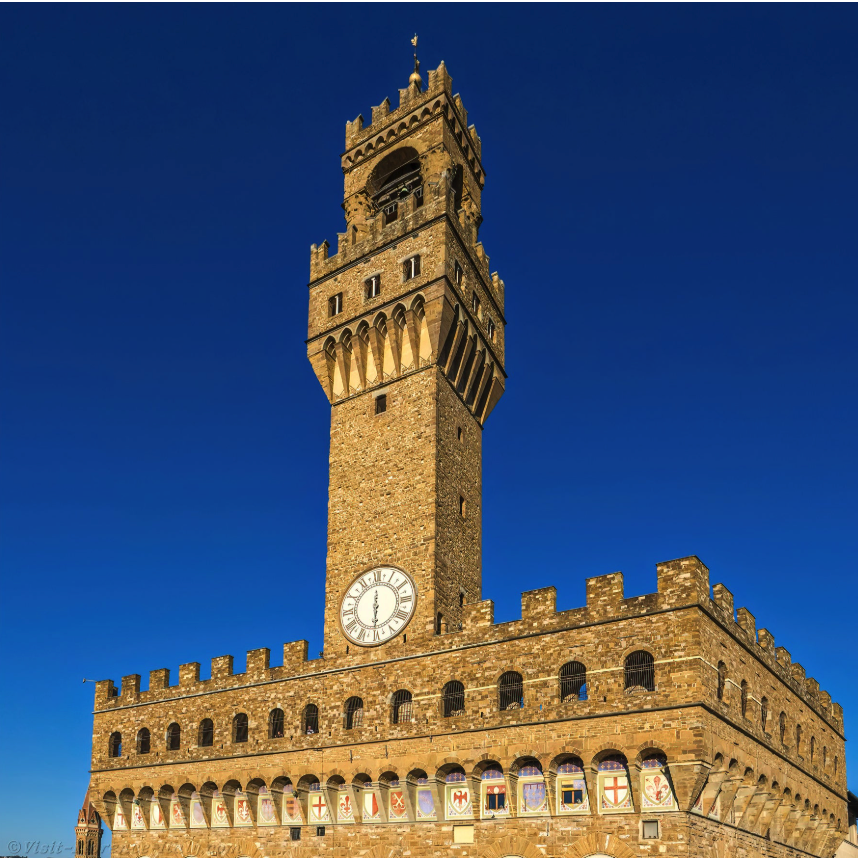
He climbed the northern bank directly below a clock tower whose ticking, in the silence, sounded like a time bomb.
Ponte Vecchio and the surrounding landscape of ruins at the end of World War II. Source: researchgate.net
"I scrambled over the river half swimming, half wading across an underwater ford and climbed the northern bank right below a clock tower — the ticking from which, in the silence, sounded like a time bomb. My sergeant and I then made our way in single file through the dark deserted streets — the sound of our boots echoing off the walls — fully expecting the first shots to ring out at any time."
That clock tower was almost certainly the Torre Arnolfo, the great medieval tower of the Palazzo Vecchio, Florence's town hall, standing just 200 metres from the Ponte Vecchio crossing point.
At 95 metres tall, it would have dominated the skyline immediately above him as he pulled himself out of the water.
The Torre Arnolfo clock has kept time over Florence since the 14th century. It was the first public clock ever installed in the city. In August 1944, its ticking was the first sound a young British officer heard as he climbed out of the Arno in the dark.
His allotted objective that night was the piazza from which "four or five streets radiated out like the spokes in a wheel": an almost perfect description of the Piazza della Signoria, the magnificent square directly in front of the Palazzo Vecchio, one of the most famous public spaces in the world.
He and his sergeant led the platoon in single file through the dark, deserted streets, the sound of their boots echoing off the walls, fully expecting the first shots to ring out at any moment. The Germans had imposed a strict curfew; not a citizen was visible.
They reached the piazza, broke into a block of flats, made their way to the roof, and mounted machine guns commanding the surrounding streets.
"My sergeant and I, followed at a distance by my platoon, made our way in single file through the dark deserted streets — the sound of our boots echoing off the walls — fully expecting the first shots to ring out at any time."
By dawn, it was a different city. People flooded the streets. Within an hour, women in the flats below had washed, dried and ironed his combat shirt and trousers. One man polished his boots. Another cut his hair and gave him a shave.
He also witnessed the darker side of liberation: young women with shaved heads paraded through the streets with placards proclaiming they had collaborated with the Germans. And at 2pm that afternoon, a lone German tank came rumbling back down one of the streets toward the piazza, fired a couple of rounds from its cannon, and withdrew. "At this particular juncture," MacKelden wrote, "there was very little evidence of red scarves and armbands on the streets."
The Gothic Line, Autumn 1944 — "Yard by Bloody Yard"
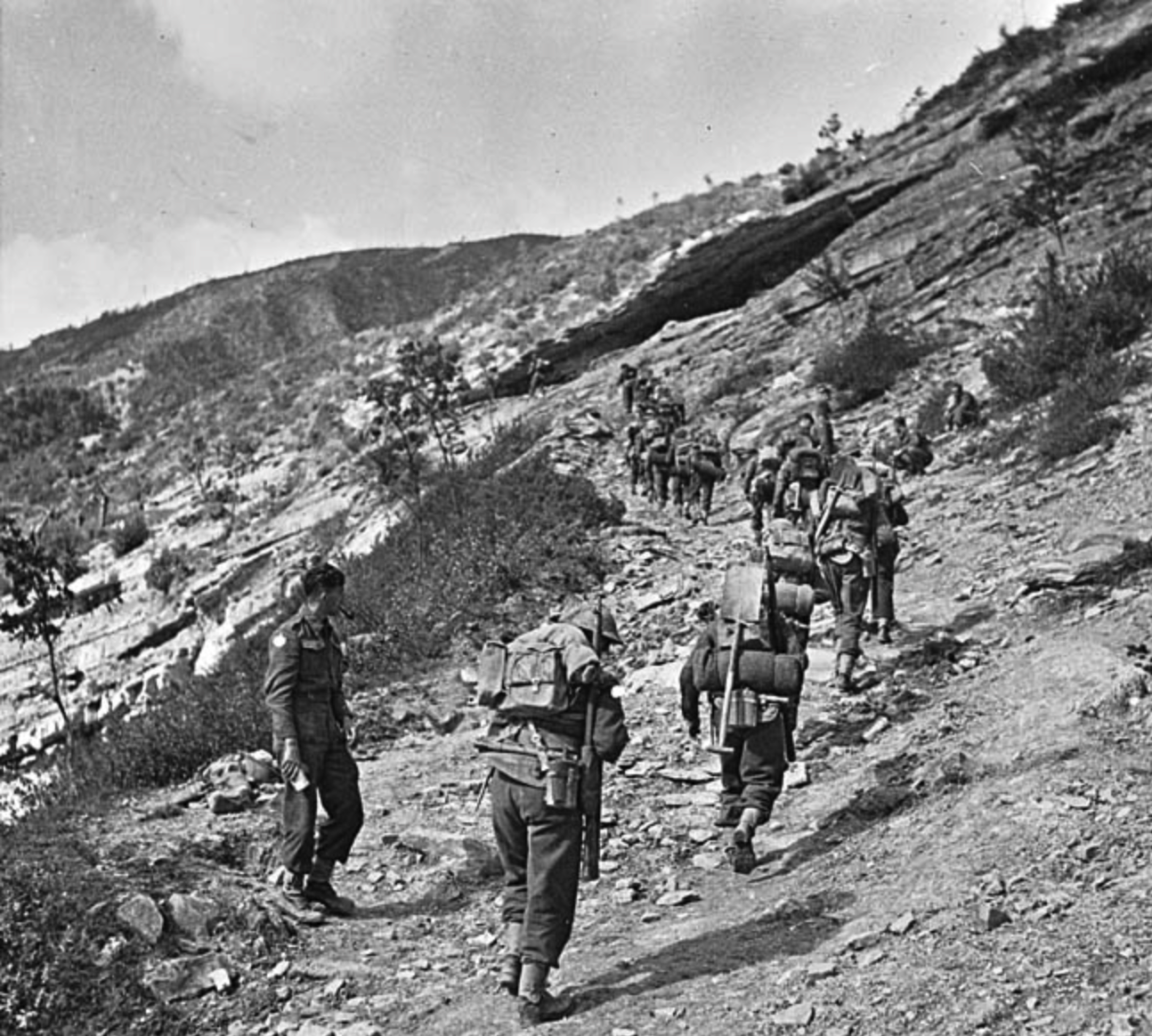
After Florence, the battalion was transported to the other side of Italy and assigned the task of storming the Gothic Line: a range of very steep, heavily fortified hills in the Apennines where the German High Command planned to halt the Allied advance.
The killing ground south of the hills had been stripped of all vegetation. The entire area was heavily mined.
Troops of the 1st British Infantry Division, attached to the Fifth Army, advance up a steep mountain trail near Monte Pratene, the Apennines, 1944. Source: warfarehistorynetwork.com
MacKelden retained only fragments: "I retain now no clear recollection of the initial stages of that battle — just fragments."
He sustained two more wounds: mortar fragments, one to the shin of his right leg, one just below his right eye. Both were dug out on the spot. He carried on.
The battalion suffered monumental casualties. Within weeks it was withdrawn, too badly mauled to continue as a fighting force.
MacKelden and surviving officers were attached as reinforcements to the Hampshire Brigade: "a formidable group with a reputation for winning at all costs — everything, it seemed to me, head on. And the consequent casualties we suffered were severe. No wonder they needed reinforcing."
October in the mountains. Bitterly cold. Invariably soaked to the skin. "The battle was being won — but yard by bloody yard."
A Dead Man on My Shoulder
One night, MacKelden was ambushed in a farmyard on patrol. He picked up a wounded Corporal and carried him over his shoulder for at least a mile and a half across the dark Italian countryside. It was only when he finally set the man down that he realised the Corporal had died shortly after being picked up.
"I can only say — and perhaps this is the only epitaph he will ever receive — he was a bloody fine and very brave soldier. And when I slipped his corpse from my shoulder that night and realised I had carried a dead man back, I think I silently wept — and by this time I had thought that nothing again could ever emotionally affect me."
The Corporal had been one of the army prisoners who had volunteered for frontline service rather than serve out his prison sentence. In death, he had proved his worth entirely.
The Best Medicine — A Barn, a Piano, and Lethal Punch
After a savage fight for the San Savino Ridge, the men were withdrawn to a farmhouse near San Marino. MacKelden looked at his men: "Their faces grey and drawn, their morale was at a very low ebb."
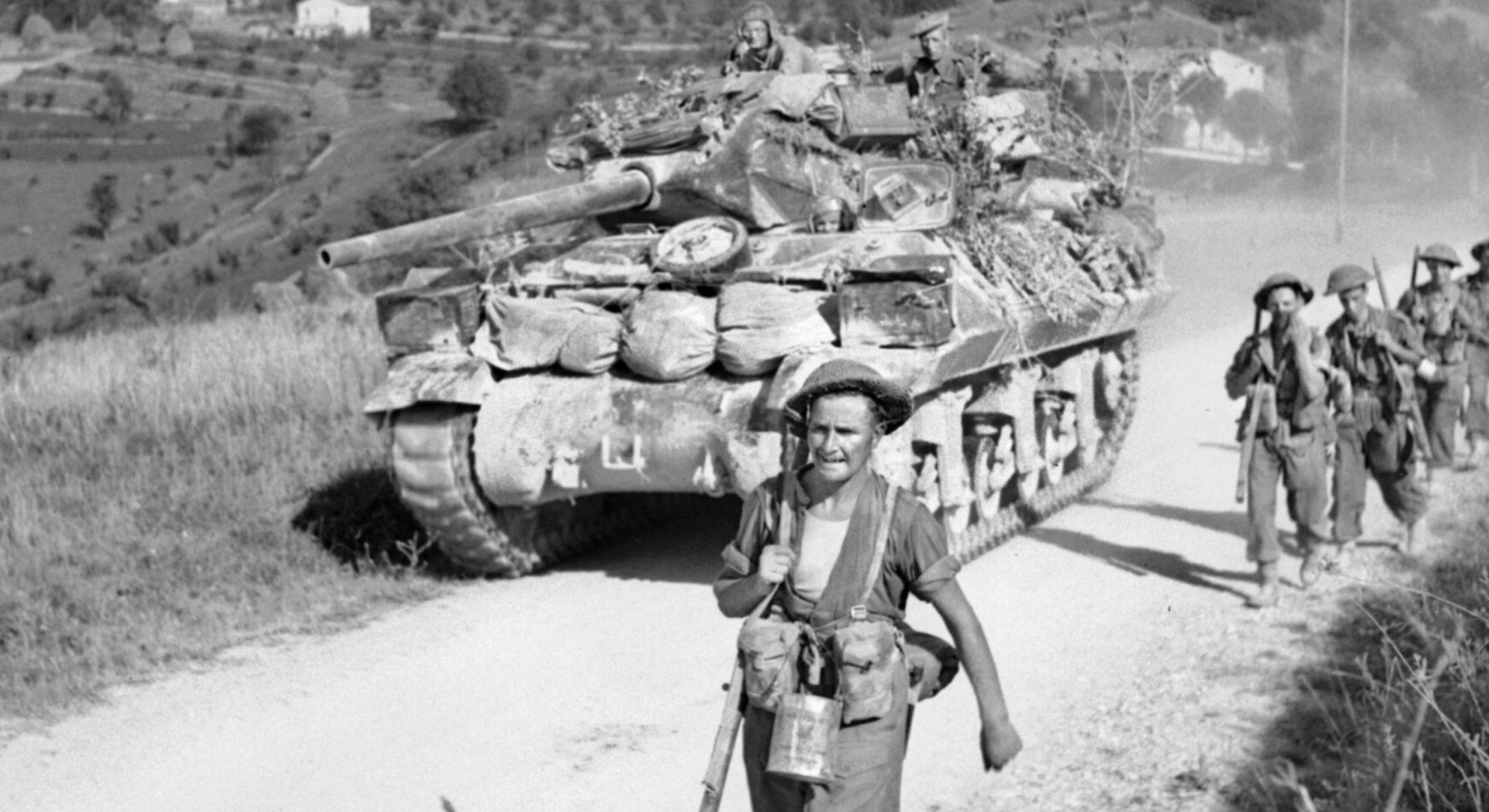
An M10 tank destroyer of the 93rd Anti-Tank Regiment passes soldiers of the 5th Sherwood Foresters in August 1944 along a dirt road during the advance toward the Apennine Mountains and the Gothic Line, the last stronghold for the German troops in Italy. Source: warfarehistorynetwork.com
At 22 years old, he made an instinctive decision: get them blind drunk. He secured a large quantity of rough new wine, had the company cooks heat it with fruit juice to make what he called "a quite lethal punch," and assembled everyone in a huge barn where they had found a battered old piano. A young Second Lieutenant played jazz and ragtime. Drunken men danced with one another, fell over, and were too drunk to get up. MacKelden ordered: no reveille the following morning.
"It was an instinctive gamble for a 22-year-old — but it worked. Two days later I had a group of tough fighting men again."
He was not to lead them into battle again. Forty-eight hours after the party, he collapsed with infectious hepatitis, yellow jaundice.
"It was bloody awful. I felt like death — would have welcomed it in fact. I don't think I have ever felt more ill."
He was evacuated to hospital at Ancona, then back to the 77th General Hospital in Trani. "It was just like coming home."
Agricultural Control Commissioner for Tuscany — "Oh, I Wish I Had Been Older"
Florence · December 1944 – February 1945
In the autumn of 1944, while recovering from jaundice in hospital at Trani and pedalling a stationary exercise bicycle going nowhere, Alec MacKelden was asked whether he would like to spend his convalescence doing an administrative job for the Allied Military Government.
He had helped capture Florence, one of the great cities of the world, and now, at the age of 22, he was about to be put in charge of its agricultural economy.
Alec in Florence.
"Having heard that these jobs offered 'perks' unlimited, I hesitated for two or perhaps three seconds and said 'yes' — very loudly! There were so many available financial lurks of which I was innocently unaware at the time."
He was sent to Rome for a three-day crash course on the growth and processing of olive oil (together with flour, the staple of the Italian diet), and posted back to Florence with the grand title of Agricultural Control Commissioner for the Region of Tuscany. He was 22 years old.
His office was in the Prefettura, the City Hall, where he lunched most days.
His flat was in the Via Fra Angelico, owned by a middle-aged opera singer who was only too happy to move into a back room and prepare his breakfast each morning in exchange for all the food she could consume, supplied from his friend Geoffrey Copplestone's central military food magazine.
"Every evening I was wined and dined at one of Geoffrey's restaurants or hotels. In less than three months I put on 42 pounds — that's what good steak, pasta and chianti can do!"
His main duty, in theory, was to control or prevent a flourishing black market in olive oil. The rationed price was 36 Lira a litre. On the black market it fetched 360 Lira: exactly ten times as much.
Since Tuscany was the principal olive oil producing region of Italy, a brisk smuggling trade across the regional borders had developed. MacKelden was responsible for stopping it.
"The rationed price of olive oil was 36 Lira a litre — but it fetched 360 Lira a litre on the black market. Since Tuscany was the principal area for olive oil production, a brisk smuggling trade over the regional borders existed."
The highlight of his Florentine sojourn was a night train raid organised by the American Garrison Commander to arrest olive oil smugglers. MacKelden's role was simply to represent the Allied Military Government.
The operation involved four separate Italian police forces (the Carabinieri, armed and magnificently uniformed; the Guardia Civile; the Guardia De Porto; and the Questura, the CID), each fiercely jealous of the others.
He drove out to the railway level crossing accompanied by a Brigadier of Carabinieri in full ceremonial dress. "I felt quite shabby by comparison."
The train was stopped. All passengers were invited to disembark. What followed was one of the more extraordinary scenes of MacKelden's wartime experience:
"It quickly became apparent that some 90% of all the passengers were highly pregnant women — all of whom were lined up and promptly thumped in the belly with a carabinieri's carbine. On literally every occasion, this evoked a loud metallic sound and the 'ladies' were invited to raise their skirts — only to reveal a cleverly made pregnancy, fabricated from old army 4-gallon petrol cans — now full of olive oil!"
Meanwhile, the Brigadier and MacKelden searched the now-empty train, the Brigadier reaching into every conceivable hiding place, uncovering not only olive oil but dozens of eggs (also forbidden contraband), all the time muttering about the frightful dishonesty of the travelling public.
By shortly after midnight it was over. The confiscated oil, eggs and assorted smugglers were loaded onto trucks, and MacKelden began the drive back to Florence in drizzling rain. Taking a bend on the churned-up, muddy road, his Fiat Ballila 508 veered gently off the road and came to rest half on its side in a hedge. He glanced over at the magnificent Brigadier to check he was unharmed.
"He had apparently secreted, God knows how many eggs about his person — all of which had been crushed on impact. Even in war there can be some very funny moments!"
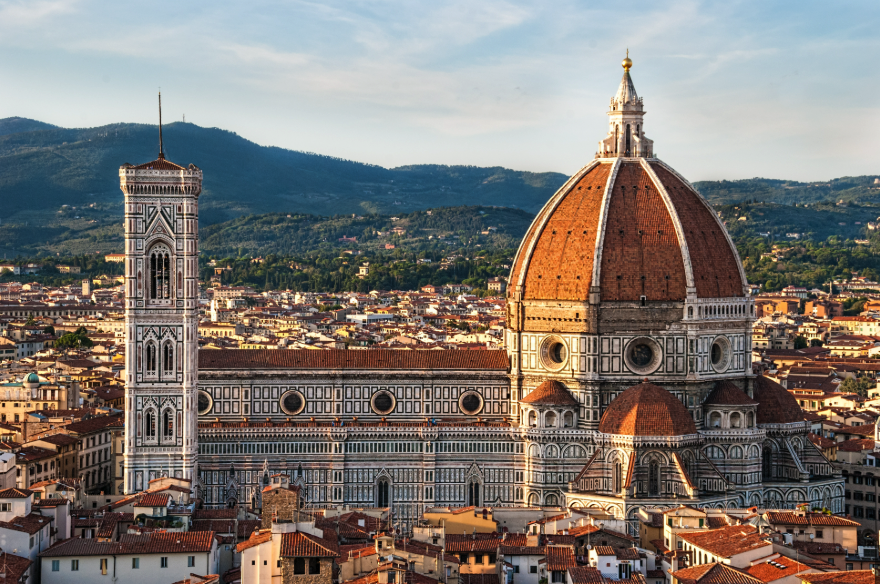
It was Christmas Eve 1944 when MacKelden attended midnight mass at the Duomo, the great cathedral of Florence, seated in a balcony high above the congregation.
Duomo di Firenze.
Below him, a very drunk American Private was conducting his own private version of the service. The city was at peace, if not yet at war's end.
He was 22 years old, running the agricultural economy of Tuscany from a flat on the Via Fra Angelico, with an opera singer making his breakfast each morning.
He would later reflect, with characteristic self-deprecation, that he had been entirely the wrong age for the job: too young and too honest to appreciate the opportunities it offered.
But something had taken root. The three-day crash course in olive oil production and processing in Rome. The economics of food rationing and black markets.
The visceral understanding of how desperate people become when food is controlled, hoarded, and traded. The realisation that food, its production, distribution, and the extraordinary lengths people will go to obtain it, was the most interesting and most human of all businesses.
Within ten years of leaving Florence, Alec MacKelden would be in Australia, launching the country's first non-fat milk powder. Within fourteen years, he would introduce the tea bag.
Within eighteen years, he would be Managing Director of one of Australia's largest food companies. The Agricultural Control Commissioner for Tuscany had found his vocation, in the most unlikely of classrooms.
"I was given a 3-day course on the growth and processing of olive oil — together with flour, the Italian's main diet constituent — and posted to Florence with the grand title of Agricultural Control Commissioner for the Region of Tuscany. I was still 22. Oh, I wish I had been older."
Lake Comacchio (Operation Roast) — "A Day of Carnage", 13 April 1945
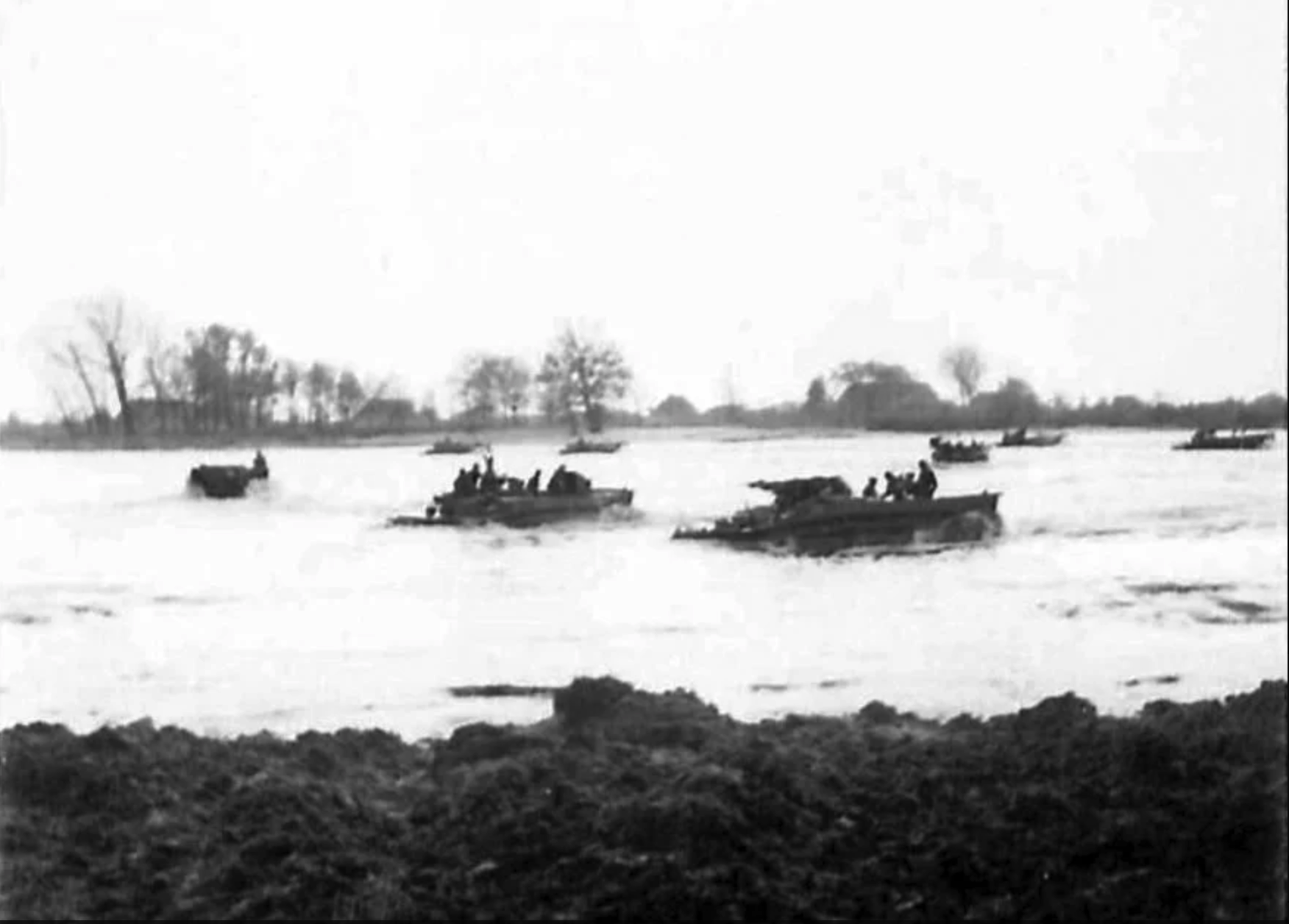
Rejoining the battalion for the final offensive, MacKelden trained for weeks on "Buffalos" or "Fantails": ungainly self-propelled landing craft, each holding about 30 men.
After several weeks of gruelling Buffalo training, he was back to his fighting weight of 150 pounds, having shed every one of the 42 pounds he had accumulated in Florence.
The battalion was inspected by Field Marshal Alexander, "resplendent in a Russian officer's tunic he had recently acquired."
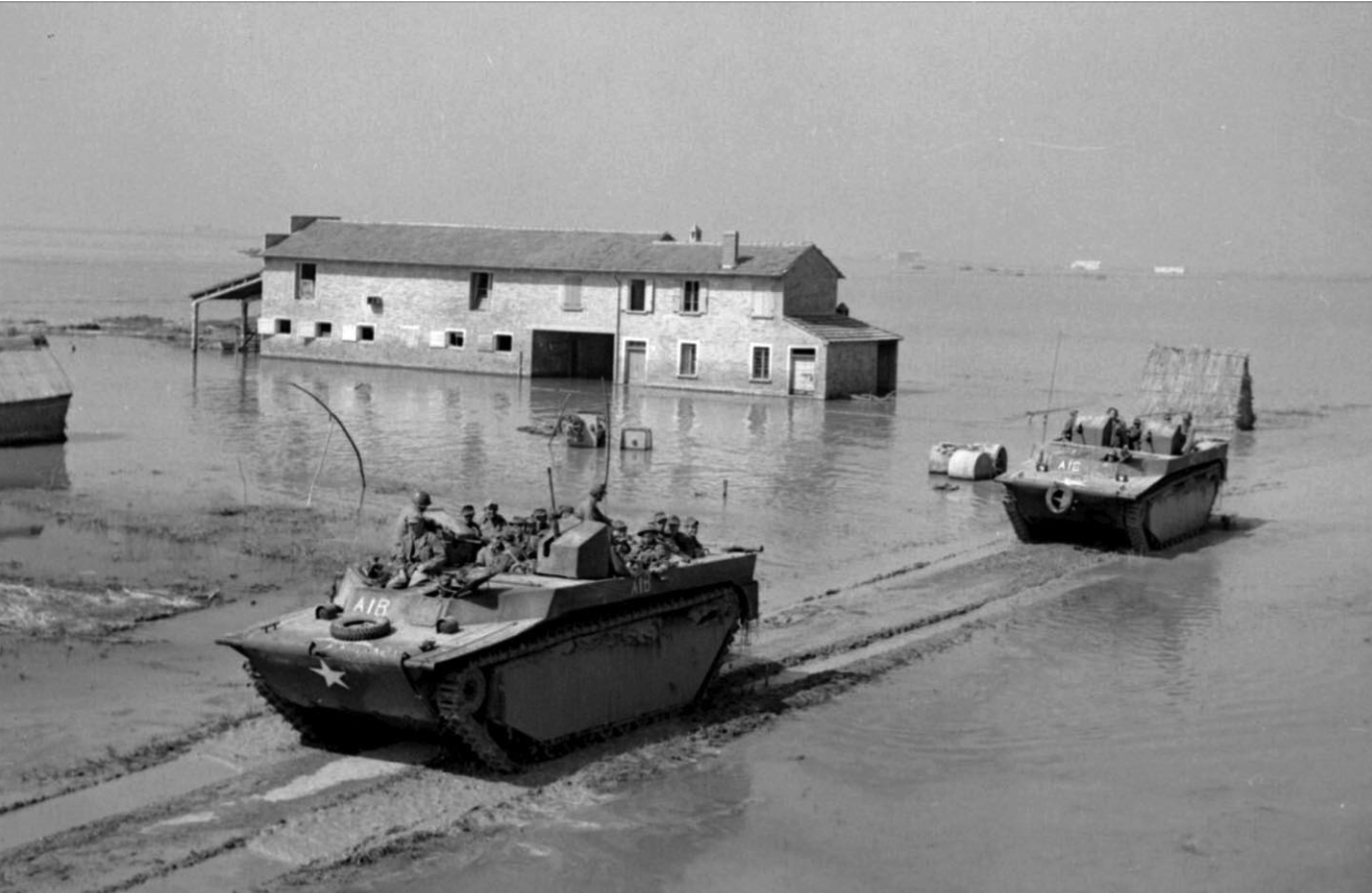
Two British LVT Buffalos transport German prisoners through the flooded landscape south of Lake Comacchio in Italy - 11 April 1945. Source: en.wikipedia.org/wiki/Operation_Roast
On the morning of Friday 13 April 1945, they embarked. The objective, finally revealed: a landing on the shores of Lake Comacchio, behind enemy lines, to secure bridges and strongpoints.
It was, MacKelden wrote, "a bleak day indeed in the long history of The Buffs": a regiment formed in 1572.
"Well, the best laid plans of mice and men! In short — we were expected. Years later I learned from Greg Blaxland that our High Command had in fact become somewhat tardily aware of what we were heading into, but decided against recalling us. Shades of the Light Brigade!"
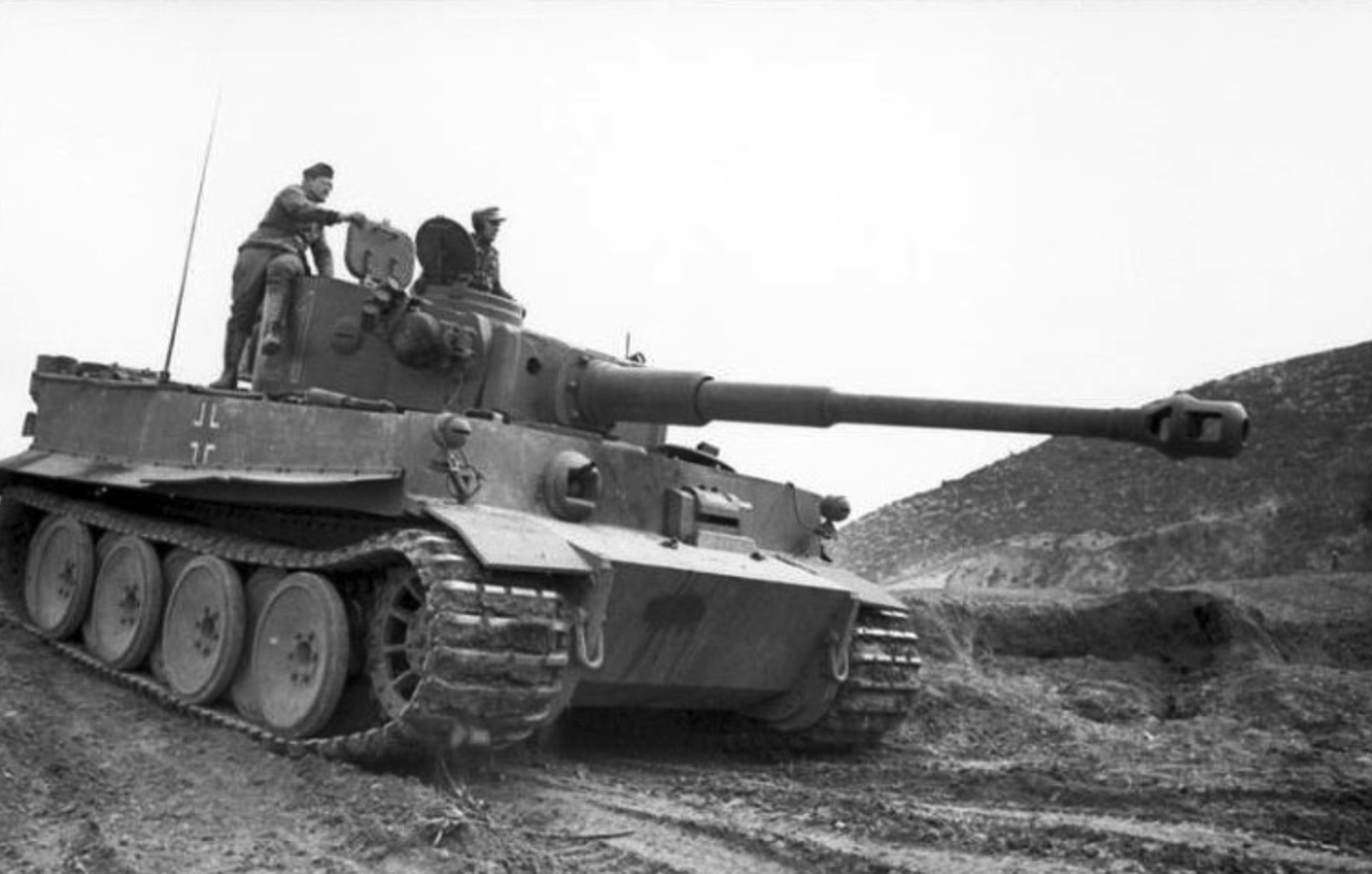
Many boats never reached shore, destroyed by fire from Tiger tanks. Those that did were met by withering machine gun fire.
One company, Wally Riley's, was virtually annihilated in minutes.
MacKelden's earliest memory of the landing was crouching behind cover on the beach, when his close friend Willy Treffgarne, a Brigade Liaison Officer, strolled towards him with an Egyptian fly whisk in one hand and a map case in the other, entirely unruffled, and said: "Can't stay there old man, I should move up if I were you."
By the following morning, of the happy band that had set out 24 hours earlier, only a gallant few remained.
German Tiger tanks destroyed many of the Buffalos before they could land.
Through the afternoon and night MacKelden attacked a series of strongpoints and fortified houses, taking a number of prisoners including a German Major educated in England: "a very arrogant man who I promptly relieved of his wristwatch." His depleted force was eventually reached by a company of the 1st Battalion Scots Guards. Together, the remnants pushed on, harrying the German retreat so hard that they found themselves well ahead of the Germans themselves.
The Canale Bianco — "My Chances of Living Through the Day Were Minimal", 24 April 1945
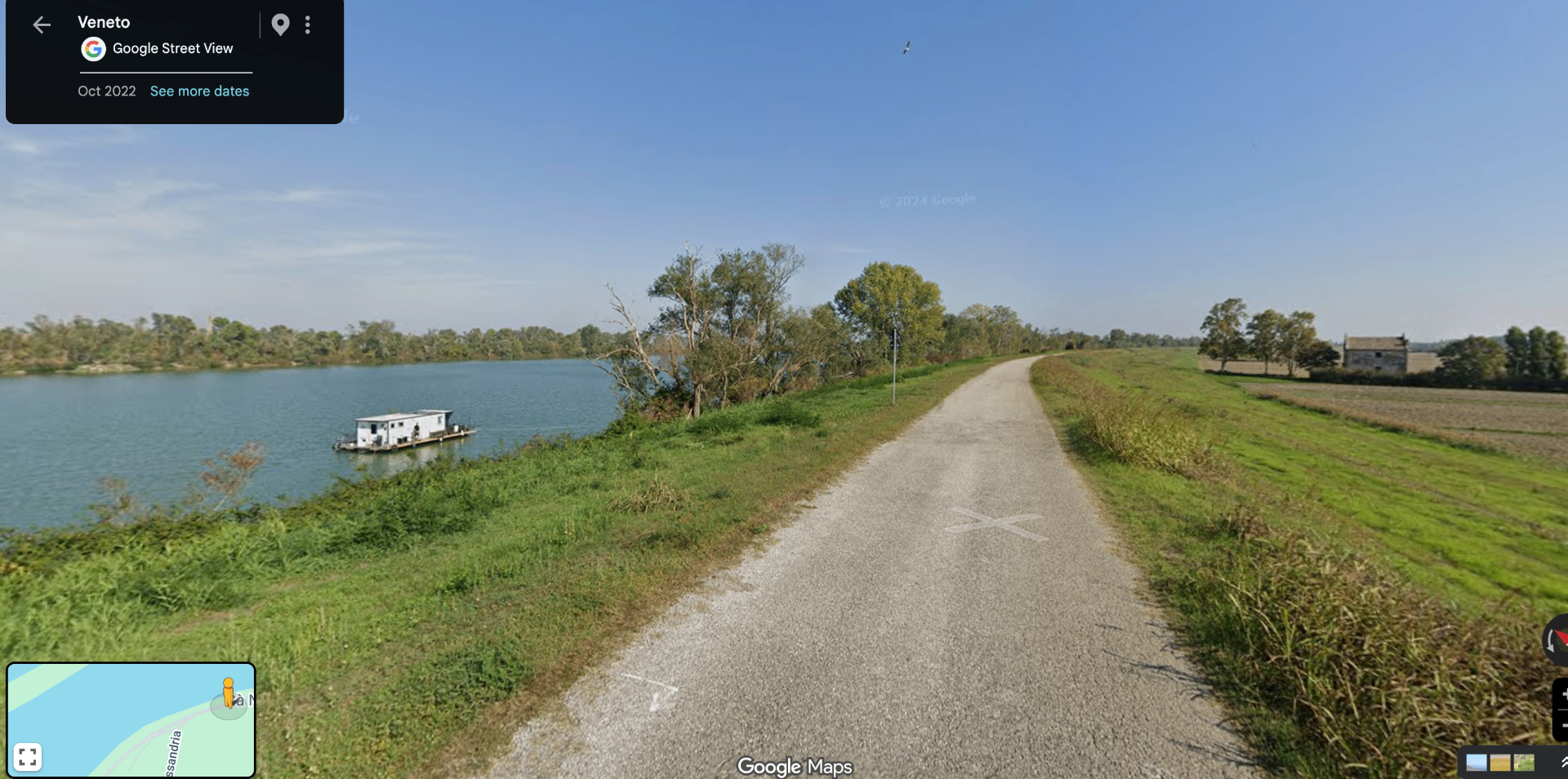
The next obstacle was the Canale Bianco: a wide canal with levee banks 8 to 10 feet high.
From a farmhouse window set well back from the bank, MacKelden could observe the German positions clearly: troops dug into the far bank, their headquarters (a large group of farm buildings) about 400 to 500 yards beyond. He could see them freely moving about, occasionally reinforcing those on the bank.
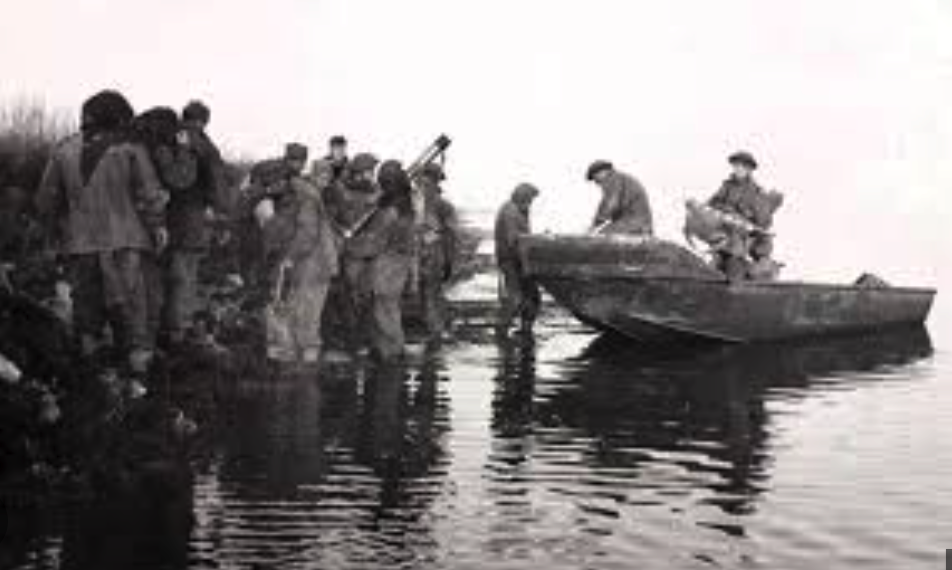
His orders from Greg Blaxland were stark: cross in three collapsible assault boats of 6 to 8 men each, shoot through the enemy on the far bank, and run straight for the headquarters.
"I must confess I was already very tired — and perhaps for the very first time came to the conclusion that my chances of living through the day were minimal. But my orders were very clear."
At mid-afternoon, about 15 men stood on the bank with their canvas boats. On the signal, they climbed the bank, manhandled the boats into the water and paddled across under covering fire. MacKelden was so focused on what they were doing that he barely registered what was happening in front of them.
Google Street View of the approximate position Alec attacked
"We reached the far bank — and I remember looking at the startled faces of the entrenched Germans as we totally ignored them and began to run as fast as our legs would carry us toward the headquarters group of farm buildings in their rear."
At the edge of the farmyard, he waited until the platoon had gathered, repeated orders, and threw grenades before going in through the front door. The element of surprise carried the day completely. They took several officers and approximately 150 other ranks prisoner.
Having secured the bridgehead, posted sentries and set up machine gun emplacements, MacKelden crawled under the staircase of the main building.
"I fell asleep — for 36 hours. It was my first sleep in three days and two nights."
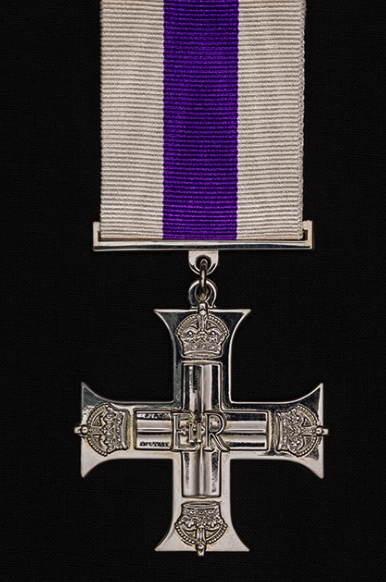
It was for these two actions, the Lake Comacchio landing on 13 April and the Canale Bianco crossing on 24 April, that MacKelden was awarded the Military Cross (scroll down for citations).
The Military Cross, 1945
The Military Cross — awarded for "outstanding gallantry and devotion to duty" at Lake Comacchio and the Canale Bianco.
London Gazette, 1945
The Official Citation
"For outstanding gallantry and devotion to duty during the period 13th April to 2nd May 1945. On 13th April 1945, Lieut. MacKelden was commanding the point platoon of 'B' Company, which had been ordered to advance over 3000 yards along a bund road to try and establish contact with two companies which had been landed by amphibians behind the enemy lines…
In spite of heavy enemy shelling and Spandau fire which caused casualties within his platoon, Lieut. MacKelden attacked with such dash and resolution that several enemy strong points were wiped out and many prisoners taken…
This officer's personal bravery, leadership and disregard for his own personal safety inspired the utmost confidence in the men, and this highly successful action enabled a substantial bridgehead to be established which was an essential thing for future operations. This officer has always shown great zeal and determination and has been the finest example to all ranks."
— The London Gazette, Supplement No. 37386, 1945
Cleveland Standard, 2 June 1945
As Reported in the Press by a War Correspondent
"It was about an hour before dawn, but the mist which hung over the swamps south of Lake Comacchio effectively blanketed the whole battle-front some days before the surrender. In their trenches along the roadside, men of the East Kent Regiment, 'The Buffs,' waited…
Quite suddenly the mist lifted. The tank fired its first round at the house, at the same time the Piat mortar man shot six bombs at the same objective. He scored five direct hits. Then Lieut. Alec MacKelden, one of the platoon commanders, gave the signal to his men. With bayonets fixed they charged across the road, at the same time shooting with everything they had. Winking out several enemy posts they re-crossed the road and drove along the other bank sweeping all opposition before them.
'Meanwhile,' MacKelden told me, 'the platoon on my right was having a rather nasty time. They ran into fire from the road and were pinned down. My platoon was lucky and we overcame all opposition quickly. Another platoon pushed straight through and the momentum of the advance was such that they broke through and took about 60 prisoners. They also rescued some of our fellows who had been wounded and captured the previous day.'"
— Cleveland Standard, Saturday 2 June 1945, p.4. By a Military Observer.
"Perhaps I Had Survived the War" — The River Po
With the canal crossing complete, the battalion moved up to the River Po: vast, fast-flowing, its south bank littered with equipment, horses and vehicles abandoned by the fleeing Germans. The silence on the south bank was unnerving.
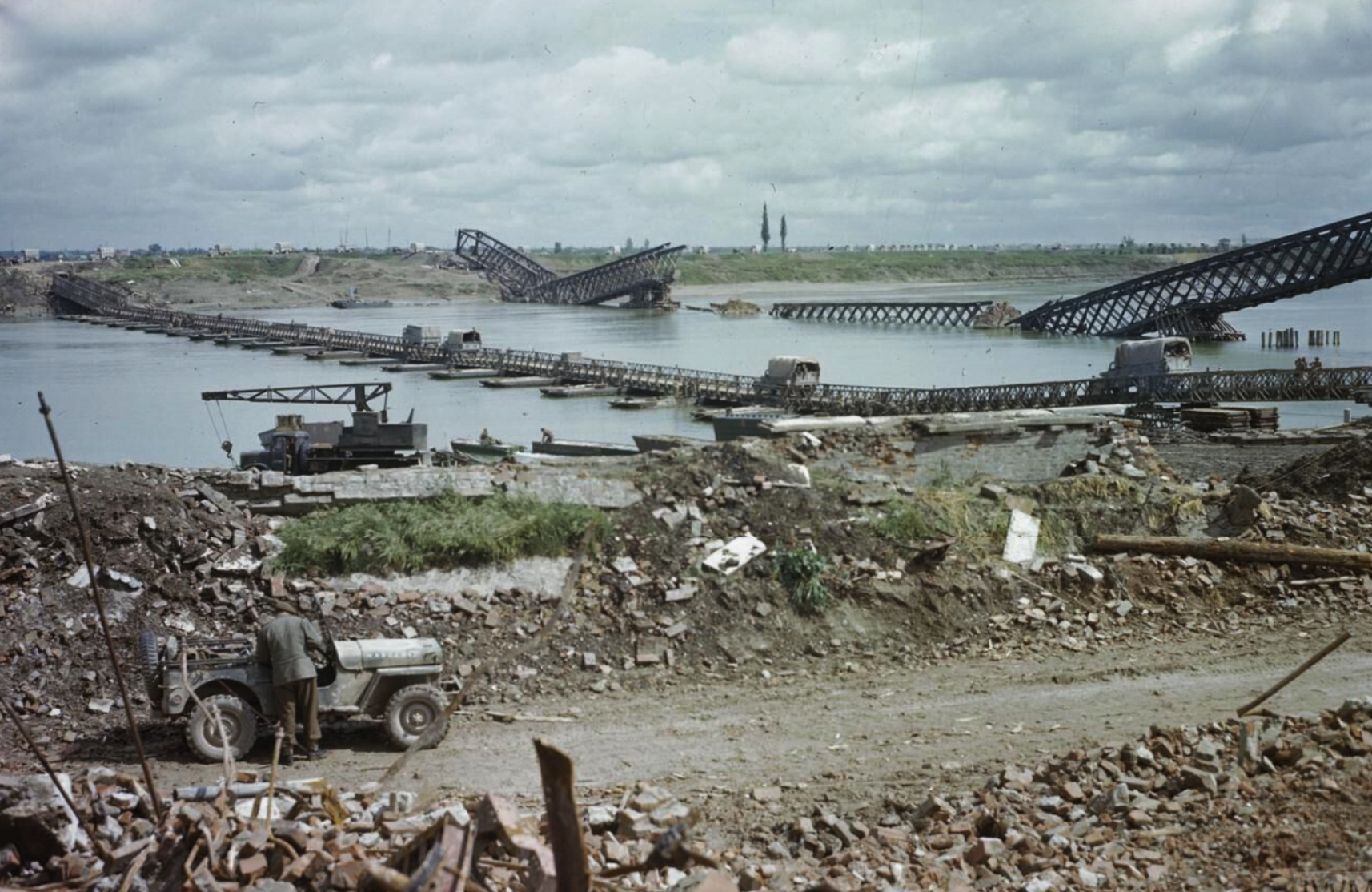
British Eighth Army traffic crossing the first pontoon Bailey bridge, constructed by the Royal Engineers, over the River Po. The remains of the previous bridge are seen alongside. Source: https://www.iwm.org.uk/collections/item/object/205189154
MacKelden was then told he had been nominated to cross the Po alone, under cover of darkness, to observe and report from the far bank.
"I don't mind recording now that I did not in the least relish the job. But one can't ignore orders. So that afternoon I busied myself preparing for my lonely assignment."
Then a message arrived cancelling his orders. A young officer from the 2nd Battalion Coldstream Guards had been assigned the job. MacKelden was "relieved beyond measure." He later learned the young Coldstreamer had crossed the river and never returned. He simply disappeared.
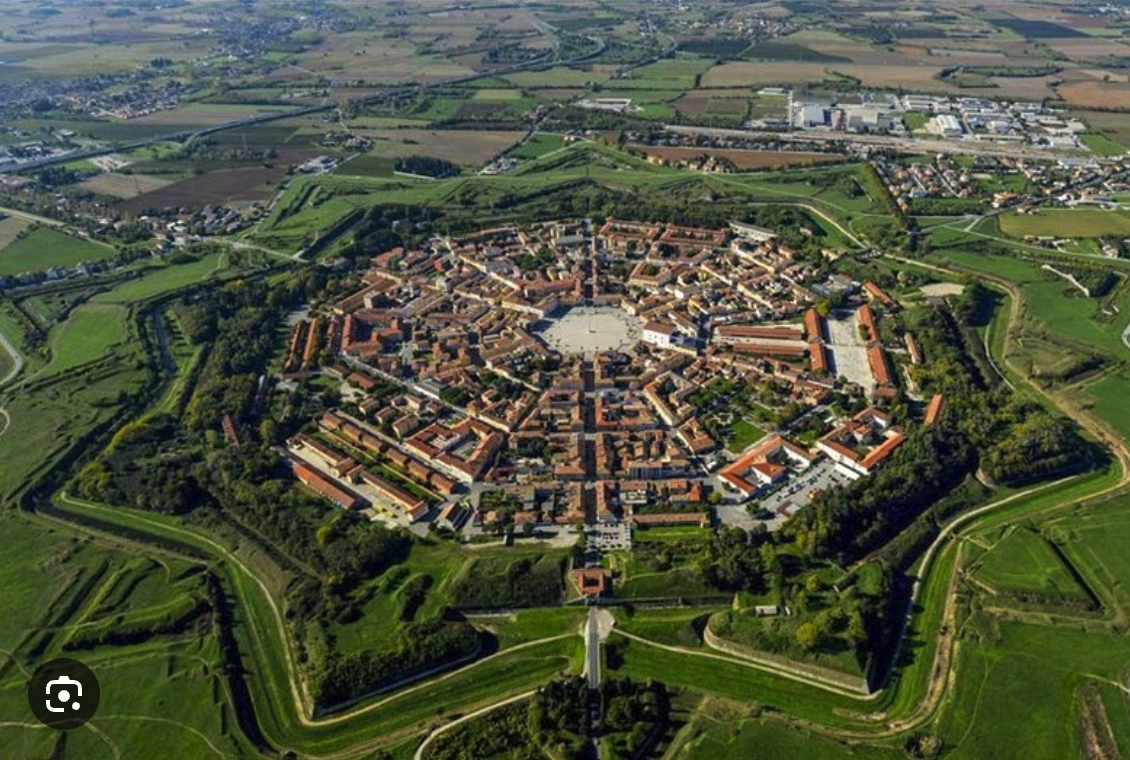
A few days later, the battalion occupied the small walled city of Palmanova. The German garrison marched out with heads held high, singing, on their way to a prisoner of war camp.
Victory in Europe, 8 May 1945
MacKelden was tasked by his Colonel to organise the battalion's VE Day celebrations in Palmanova. He had posters printed in Italian inviting the town's young women to a dance in the park, secured an American Army band, and laid on sandwiches and new wine. The signorinas arrived in droves, all armed with string bags, which were rapidly filled with food. Some passed their bags over the wall to relatives outside and returned for more.
The fortress town of Palmanova.
"The troops relaxed in the realisation that it was all over — and they were alive."
He subsequently served with the 24th Guards Brigade in Trieste, along the Morgan Line border with Yugoslavia, and with the occupation force in Greece near Kilkis. He was demobilised on 12 July 1946 at Aldershot, after six years and nine months of service.
"Whatever the British Army might have badly organised, it was certainly not its demobilisation process."
A Soldier's Reflection
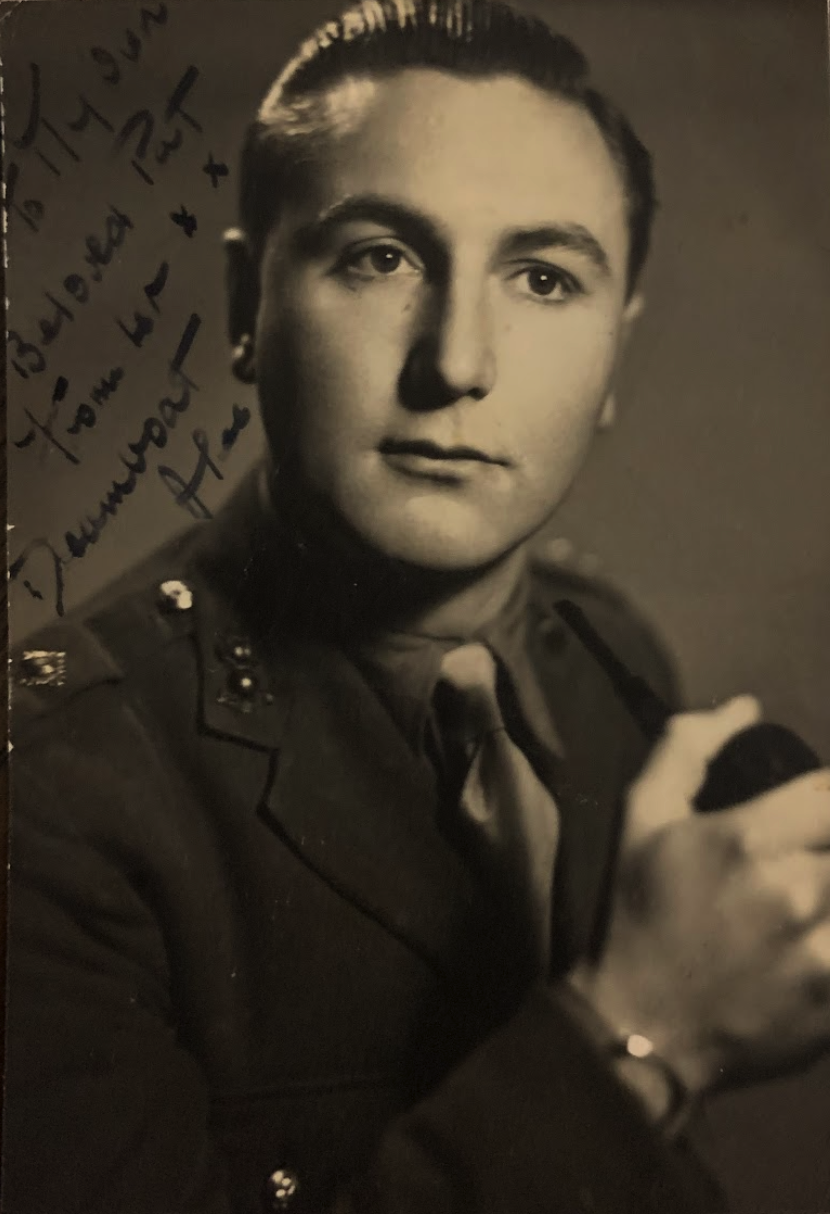
Alec MacKelden, c. 1943"I want to dispel any notion that I was at any time any sort of hero, for I was not. I was — I suspect — in common with most of my comrades, mortally terrified for most of the time I was in combat. Perhaps, however, I was more frightened of showing it, than the terror itself. War, for the frontline combat soldier is not and could never be in the least romantic. It is at best an obscene gut-wrenching ordeal that no human being should be subjected to. Over forty-two years have passed since I last killed or maimed my fellow man, and to this day the guilt lives with me when I think, as I still do, of the mothers and wives who mourned — and little children who were deprived of a father at my hand."